- info@www.dlan.ai
- Mon - Sat: 8.00 am - 7.00 pm
We are creative, ambitious and ready for challenges! Hire Us

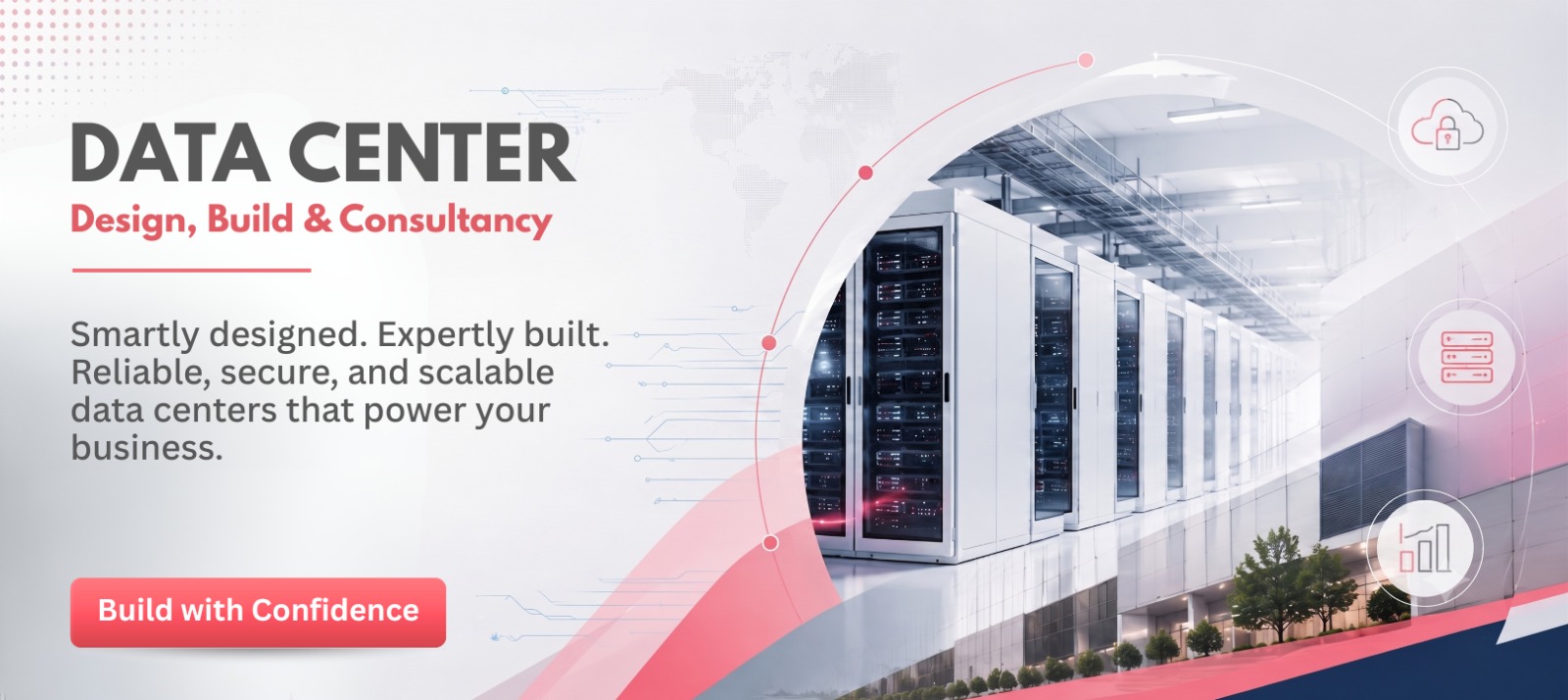
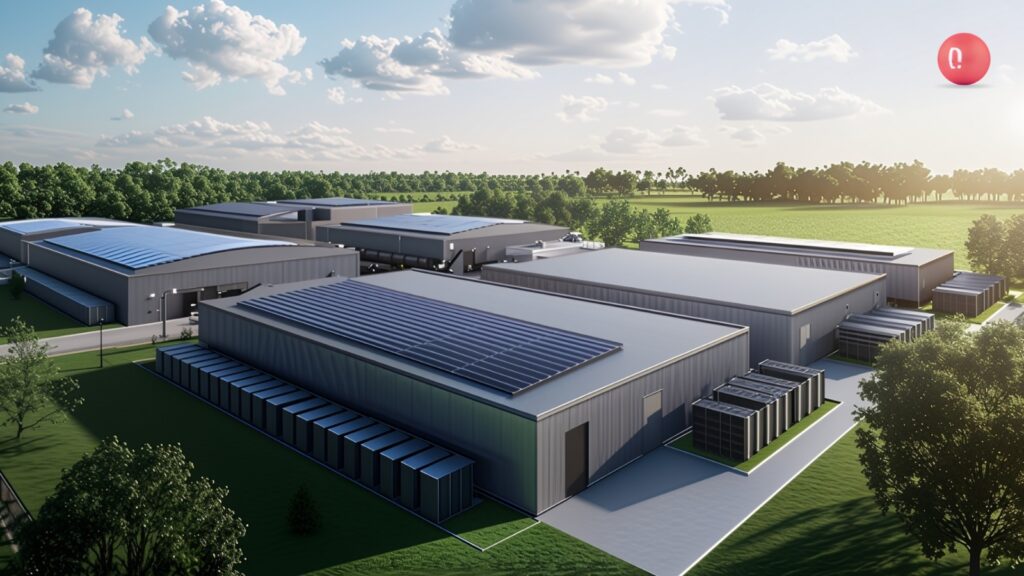
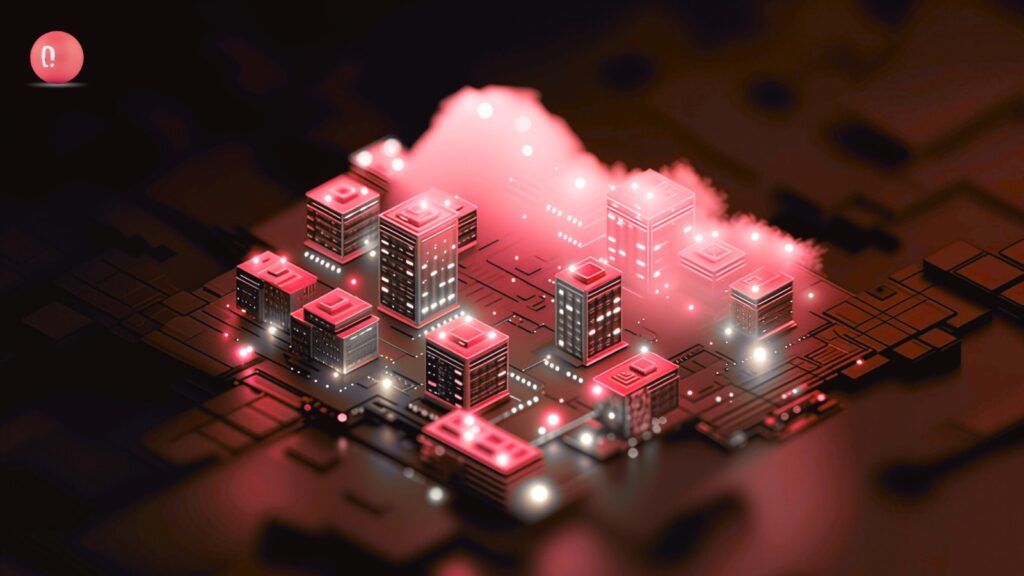
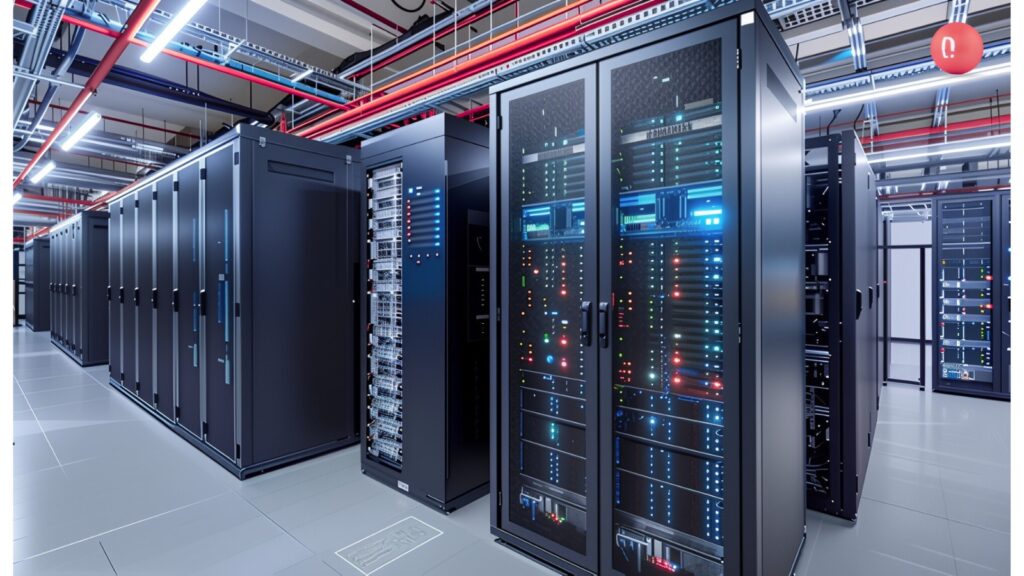
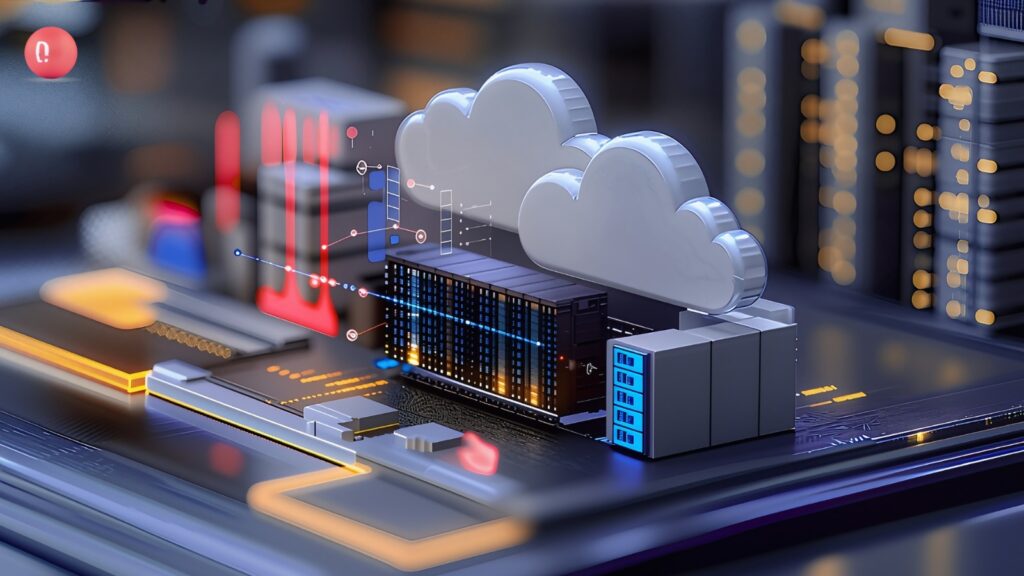
A modern data center is at the heart of business operations — supporting critical applications, enterprise data, digital services, cloud environments, and demanding workloads like AI and advanced analytics.
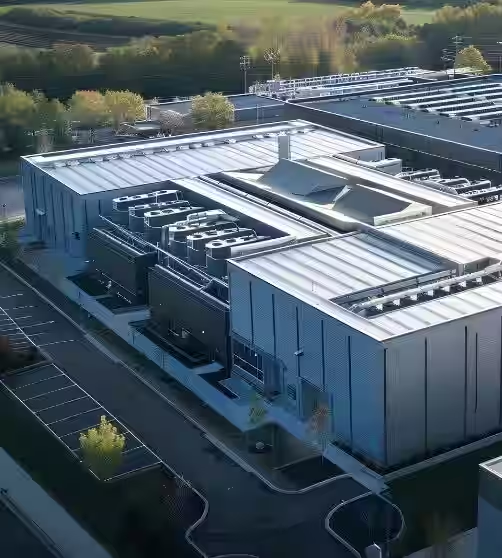
From initial assessment and capacity planning to compute, storage, networking, power, cooling, security, deployment, and validation — the goal is a data center that performs reliably today while preparing the business for tomorrow. Organizations evaluating their current environment can begin with an IT Infrastructure Assessment to identify capacity limitations, infrastructure risks, performance gaps, and modernization opportunities before making major investments.
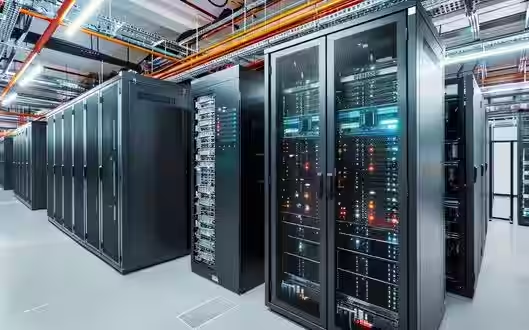
Compute resources depend on stable power. Servers and storage systems require effective cooling. Applications depend on reliable network connectivity. Security controls must protect physical and digital assets, while backup and redundancy mechanisms reduce the risk of disruption.
DLAN aligns infrastructure decisions with business objectives, workload requirements, operational priorities, and future technology needs — connecting data center strategy with our broader IT Consulting Services.
Every successful project begins with a clear understanding of the current environment. Adding more hardware does not automatically improve performance, reliability, or resilience — infrastructure should be planned according to workload requirements, expected growth, system dependencies, availability targets, risk tolerance, security needs, and business priorities. The purpose is to understand where the organization stands today and establish a practical roadmap for what comes next.

The architecture of a data center directly affects its reliability, performance, scalability, and maintainability. A strong design considers not only individual technologies but how those technologies interact across the complete environment — aligned with DLAN's broader IT Infrastructure Solutions.
Servers provide the processing power required to run business applications, databases, virtualization platforms, analytics systems, and digital services. Capacity should meet current workloads while scaling as requirements increase — including accelerated computing for AI and high-performance workloads.
Data continues to grow in volume and strategic importance. Storage architecture must balance capacity, performance, availability, data protection, backup requirements, recovery objectives, and scalability.
Networking connects nearly every part of a modern data center. High-performance switching, routing, structured connectivity, segmentation, bandwidth planning, and redundancy reduce bottlenecks and maintain continuous communication.
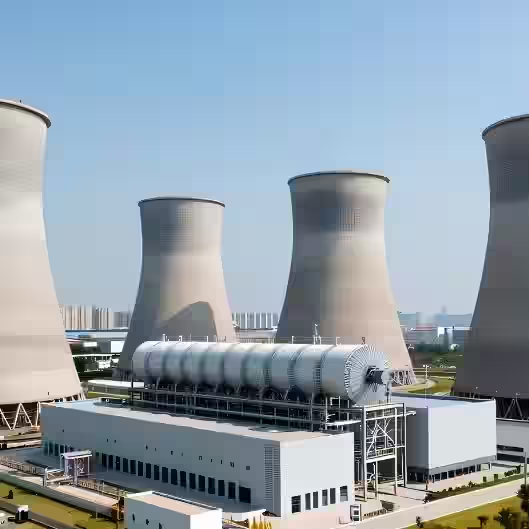
Power architecture needs to support critical systems even when unexpected failures occur — including UPS systems, backup power, redundant distribution, generators, monitoring, and planned failover mechanisms.
Cooling is equally important. Servers, networking, storage, and high-performance computing infrastructure continuously produce heat; without effective thermal management, excessive temperatures reduce performance, increase failure risk, and shorten equipment lifespan. As organizations introduce more powerful systems and AI workloads, both power density and cooling requirements can increase considerably.
For many organizations, even a short period of downtime can interrupt operations — employees may lose access to systems, customer-facing applications can become unavailable, and critical transactions can stop. High availability must be designed into infrastructure from the beginning, with redundancy across compute, storage, network connectivity, power, cooling, and backup systems.

Controlled facility access, CCTV monitoring, environmental sensors, equipment protection, and fire detection and suppression systems protect the physical environment.
Network segmentation, secure configuration, infrastructure monitoring, threat detection, data protection, backup and recovery, and incident response procedures work together as one strategy.
Not every employee, administrator, vendor, or external user needs the same access. Strong identity controls reduce unnecessary privileges while supporting accountability.
Organizations don't always need to replace an existing data center or build a new facility. Targeted modernization — consolidating infrastructure, introducing virtualization, improving network architecture, and strengthening backup systems — can significantly improve performance, reliability, and efficiency.
Modern enterprise infrastructure increasingly extends across on-premises systems, private and public cloud, SaaS applications, remote offices, and edge environments. The objective isn't to move everything to the cloud — it's to place each workload where it best supports technical and business needs.

AI model training, inference, machine learning, and advanced analytics can require significantly greater computing capacity than traditional enterprise applications. A data center designed solely around traditional workloads may require substantial changes when high-density computing is introduced later — future-ready planning reduces this risk.
Data center requirements rarely stay static — businesses add applications, users, devices, and data, while workloads become more demanding. Scalability should be considered across compute, storage, network bandwidth, rack capacity, power, cooling, physical space, security, and backup infrastructure.
A well-designed architecture creates value only when implemented correctly. DLAN supports the full journey through planning, design, implementation, testing, validation, documentation, and operational readiness — with ongoing management available through our Managed Services.
Resilient infrastructure keeps important applications, services, and systems accessible.
Compute, network, and storage architecture aligned with the actual requirements of business workloads.
Layered physical, network, system, and identity controls protect critical infrastructure and data.
Businesses can expand infrastructure as technology demands and organizational requirements grow.
Backup, redundancy, and recovery planning reduce the impact of infrastructure failures.
A modern foundation for cloud computing, AI, automation, analytics, and emerging technologies.
Whether you're planning a new facility, upgrading an existing environment, expanding capacity, or preparing for AI workloads — contact DLAN to discuss your infrastructure requirements and build a strategy designed for long-term performance and growth.
uk@dlan.ai