







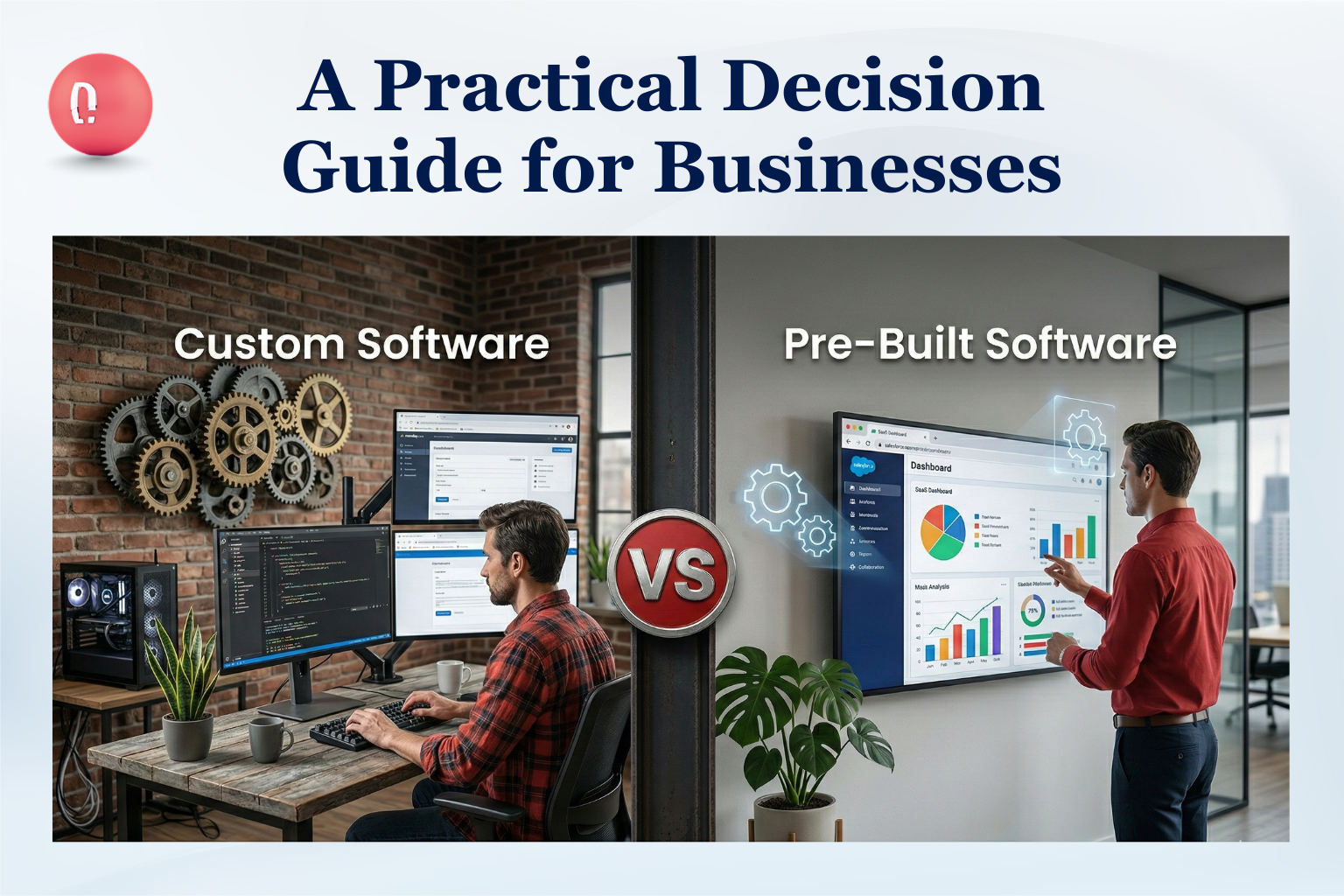
Choosing the right software is one of the most critical decisions a business can make. The choice between custom software and pre-built (off-the-shelf) software affects efficiency, costs, scalability, and long-term growth. While pre-built solutions offer speed and convenience, custom software provides tailored functionality that aligns perfectly with business needs. Understanding the advantages, limitations, and costs of each option helps businesses make an informed decision that maximizes value and supports strategic objectives. This guide breaks down the key differences and helps determine which solution is right for your organization. What Is Pre-Built Software? Pre-built software is a ready-made application designed for general use across a wide range of businesses. It is usually installed or accessed via subscription, with pre-defined features and workflows. These solutions are quick to deploy and often come with support and regular updates. However, they are built for general requirements, which means they may not fully meet your organization’s unique needs. Businesses may need to adapt processes to the software or rely on multiple tools to fill functional gaps. What Is Custom Software? Custom software is developed specifically for your business to meet its unique requirements. It is built to support your workflows, processes, and long-term objectives. Unlike pre-built software, custom solutions offer flexibility, scalability, and precise alignment with your operations. From automating internal processes to improving customer experiences, custom software is tailored to solve your specific challenges and grow with your business. Key Differences Between Custom and Pre-Built Software Understanding the differences between custom and pre-built software is crucial for making an informed decision. Each approach has unique advantages, costs, and limitations, and choosing the right one depends on your business needs, workflows, and long-term goals. 1. Functionality and Fit Pre-built software offers standard features designed to meet the needs of a wide range of businesses. While it can cover common tasks, it may not fully support your unique processes, forcing teams to adapt their workflows to the software. Custom software, on the other hand, is built specifically around your business operations. Every feature is designed to align with your workflows, ensuring the software truly supports your goals and maximizes efficiency. 2. Implementation Time Pre-built software is ready to use immediately, allowing businesses to deploy it within days or weeks. This makes it a convenient option when time is critical. Custom software requires a development cycle that includes requirement gathering, design, testing, and deployment. While this takes more time upfront, the result is a solution that fits your exact needs and avoids compromises on functionality. 3. Cost Structure Pre-built software generally comes with lower initial costs and often uses subscription-based pricing models. This makes it accessible for businesses with limited budgets. Custom software typically requires a higher upfront investment. However, it avoids unnecessary licensing fees for features you don’t use and provides better long-term value because it grows and adapts with your business. 4. Scalability Pre-built software may have limitations when it comes to customization or scaling as your business grows. Adding new features or accommodating more users can be difficult or expensive. Custom software is designed to scale with your organization. As your workflows evolve or your team grows, the software can be updated or expanded without major disruption, ensuring it remains useful for years to come. 5. Support and Maintenance With pre-built software, support is generally standardized, and updates are provided according to the vendor’s schedule. Customization options for these updates are limited. Custom software comes with tailored support and maintenance plans. Developers can address issues, add new features, and modify the software as your business needs change, ensuring your system stays efficient and relevant. Benefits of Pre-Built Software Pre-built software, also known as off-the-shelf software, offers several advantages for businesses that need ready-to-use solutions. While it may not be tailored to every workflow, it provides convenience, cost-effectiveness, and reliability that can be valuable for many organizations. Quick Deployment One of the main benefits of pre-built software is its speed of implementation. Since the application is already developed, businesses can get started immediately without long development cycles. This is particularly useful for teams that need a fast solution to manage operations, track data, or support day-to-day processes. Lower Upfront Costs Pre-built solutions generally come with lower initial expenses compared to custom software. Many offer subscription-based pricing or one-time purchase options, making them ideal for small businesses or startups with limited budgets. This allows organizations to access functional software without committing to a large upfront investment. Reliable Updates Most pre-built software providers regularly release updates, bug fixes, and enhancements. This ensures that the software remains compatible with evolving technology standards and reduces the burden of maintenance on your internal teams. Businesses can rely on vendor support for troubleshooting and technical issues. Proven Functionality Pre-built software has been tested by many users across industries, which reduces the risk of errors, bugs, or performance issues. Its functionality is established and reliable, giving businesses confidence that the core features will work effectively without extensive testing or customization. Benefits of Custom Software Custom software offers unique advantages for businesses that need solutions designed specifically for their workflows, processes, and long-term goals. Unlike pre-built software, it provides flexibility, scalability, and tailored functionality that helps organizations operate more efficiently and gain a competitive edge. Custom Functionality Custom software is built to meet your business’s specific requirements. Every feature is designed around your processes, eliminating unnecessary tools and ensuring that the software truly supports your operations. This precision allows teams to work more efficiently and reduces time wasted on tasks that generic software cannot handle. Better Integration Custom solutions connect seamlessly with your existing systems, tools, and databases. This ensures smooth data flow across platforms, reduces duplicate work, and allows teams to access all necessary information in one place. Better integration leads to fewer errors, faster processes, and improved decision-making. Scalable for Growth As your business grows, custom software can adapt to new workflows, additional users, or increased workloads. Unlike off-the-shelf solutions, which may have limitations, custom software evolves with your organization,
- info@www.dlan.ai
- Mon - Sat: 8.00 am - 7.00 pm
We are creative, ambitious and ready for challenges! Hire Us