







IT Consulting vs In House IT: Which Is More Cost Effective?
Technology has become the backbone of modern businesses, supporting everything from daily operations to long term strategic growth. Organizations rely on IT systems to manage processes, ensure security, and maintain seamless communication across teams. As businesses scale, the complexity of their technology needs increases, making IT management a critical factor in maintaining efficiency and competitiveness.
Deciding how to handle IT is one of the most important financial decisions for growing companies. Many organizations face the choice between building a full in house IT team or leveraging external IT consulting services. Each option comes with distinct advantages, challenges, and costs, which can significantly impact budgets, operational efficiency, and the ability to scale effectively. Understanding these differences is essential for making an informed decision that aligns with both business goals and financial strategy.
Understanding In House IT Teams
An in house IT team is composed of employees who are fully dedicated to managing a company’s technology. These teams handle day to day support, system maintenance, and resolving internal technical issues. Having an internal team provides direct control and ensures familiarity with the company’s processes and systems. However, building and maintaining a full time IT team can become expensive, especially for growing businesses with evolving technology needs.
Costs Associated with In House IT
Managing an in house IT team involves more than just hiring staff. Businesses must invest in salaries, tools, training, and infrastructure, while also preparing for unexpected operational challenges. Understanding these costs helps organizations make informed decisions about IT management and budgeting.
Salaries and Benefits
Maintaining an in house IT team requires significant investment in salaries and benefits. Businesses must offer competitive compensation packages to attract and retain skilled professionals. In addition to salaries, benefits such as health insurance, retirement plans, and paid leave add to the overall cost of keeping an internal team.
Tools, Software, and Infrastructure
An in house IT team also requires access to the right tools, software, and infrastructure. Businesses need to invest in software licenses, hardware upgrades, and network equipment to ensure smooth operations. These investments are ongoing, as systems require regular updates and maintenance to stay current with business needs.
Ongoing Training and Skill Development
As technology continues to evolve, IT staff must continuously update their skills through training programs. Ongoing training ensures that employees can manage modern systems, implement new solutions, and address emerging security threats. Without proper training, businesses risk inefficiencies and increased vulnerability.
Operational Risks and Hidden Costs
Unexpected absences, staff turnover, or skill gaps can disrupt daily IT operations. These disruptions may delay critical projects and increase costs for the organization. Businesses must also plan for contingencies to prevent downtime, which adds hidden expenses beyond salaries and infrastructure.
Limitations of In House IT
While having an in house IT team offers certain advantages, it also comes with several limitations that can impact efficiency and growth. Understanding these drawbacks helps businesses evaluate whether an internal team alone is sufficient for their technology needs.
Limited Specialized Expertise
In house teams may not always have deep expertise in specialized areas such as cybersecurity, cloud strategy, or advanced infrastructure. These gaps can prevent organizations from implementing cutting edge solutions or responding effectively to emerging security threats. Without access to specialized skills, businesses may miss opportunities to optimize their technology environment.
Focus on Daily Operations
Internal IT staff often spend the majority of their time managing day to day tasks such as troubleshooting, system maintenance, and user support. This focus on operational issues leaves little time for strategic planning, long term projects, or proactive improvements that could drive business growth.
Resource Constraints for Major Projects
Limited team size and resources can slow down the execution of large technology projects, system upgrades, and innovation initiatives. Businesses may face delays or incomplete implementations due to insufficient manpower or expertise within the internal team.
Impact on Efficiency and Costs
Over time, these limitations can lead to inefficiencies, project delays, and higher overall costs. Businesses may need to hire external experts for complex projects or incur additional expenses to train staff, increasing operational overhead.
What Is IT Consulting?
IT consulting gives businesses access to external experts who provide guidance on technology decisions and strategy. Consultants focus on planning, implementing, and optimizing technology solutions to meet specific business objectives. They can work on short term projects, such as system upgrades, or provide ongoing advisory support for long term planning. This model offers flexibility and access to specialized expertise without the costs and commitment of maintaining full time IT staff.
Costs Associated with IT Consulting
Understanding the costs of IT consulting helps businesses make informed decisions about how to manage their technology needs. Unlike in house IT, consulting offers flexibility and access to specialized expertise without long term financial commitments.
Project-Based or Service-Based Fees
IT consulting costs are usually structured around specific projects or services. Businesses pay for the work completed, such as implementing a new system, upgrading infrastructure, or providing advisory support. This structure allows companies to avoid paying for unused hours or resources, making IT spending more efficient and targeted.
Pay Only for the Expertise You Need
One of the main advantages of IT consulting is that you only pay for the level of expertise your business requires. Whether you need guidance for a single project or support for complex IT initiatives, consultants provide specialized skills that might be too costly or difficult to maintain in an internal team.
No Long Term Salary or Benefits
Unlike hiring full time IT staff, consulting does not involve salaries, health benefits, or retirement contributions. This eliminates the financial and administrative burden of long term employee commitments, allowing businesses to access expert knowledge without adding overhead.
Predictable and Controllable Expenses
IT consulting allows businesses to forecast costs more accurately because fees are agreed upon in advance. This predictability helps companies plan budgets, reduce unexpected expenses, and maintain control over IT spending. Businesses can scale consulting services up or down based on current needs, making this a flexible and cost effective solution.
Benefits of IT Consulting for Cost Control
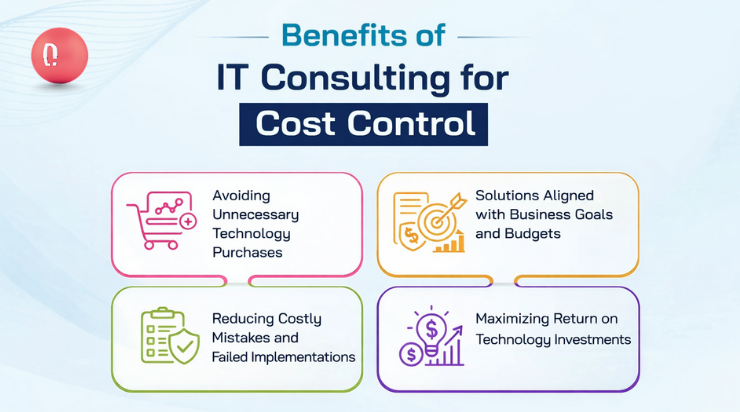
IT consulting not only provides expertise but also helps businesses manage technology costs more effectively. By leveraging consultants, organizations can optimize spending while achieving strategic technology goals.
Avoiding Unnecessary Technology Purchases
IT consultants analyze existing systems and processes to identify what technology is truly needed. They prevent businesses from investing in tools or software that do not add value, reducing wasteful spending and freeing up budget for essential initiatives.
Solutions Aligned with Business Goals and Budgets
Consultants recommend solutions that are tailored to the company’s objectives and financial capacity. By aligning technology choices with both business goals and budget constraints, they ensure investments deliver measurable outcomes rather than unnecessary expenses.
Reducing Costly Mistakes and Failed Implementations
With years of experience across industries, IT consultants help businesses avoid common pitfalls in technology projects. Their guidance reduces the risk of failed implementations, project delays, and unexpected costs, which can otherwise negatively impact ROI.
Maximizing Return on Technology Investments
By combining expertise, planning, and careful solution selection, IT consulting helps businesses get the most value from their IT spend. Strategic guidance ensures that every investment contributes to operational efficiency, productivity, and long term growth.
IT Consulting vs In-House IT: Which Option Is More Cost Effective?
Deciding between IT consulting and an in house IT team depends on your business size, complexity, and technology needs. Small and growing businesses often benefit more from IT consulting because it provides access to specialized expertise without the overhead of full time employees. Larger organizations may find a hybrid approach more effective, combining in house IT staff with consulting support to balance control, efficiency, and costs.
A hybrid strategy allows businesses to maintain daily operational support through internal staff while leveraging consultants for strategic projects or specialized technology expertise. Choosing the right model ensures cost control, optimized technology usage, and long term growth.
Comparison Table: Which IT Model Works Best
| IT Model | Best For / Situation | Key Benefits |
| IT Consulting | Small or growing businesses, limited internal IT resources | Flexible costs, access to specialized expertise, project-based support, no long term salary obligations |
| In-House IT | Larger businesses with stable IT needs | Full control over IT operations, familiarity with internal processes, immediate on-site support |
| Hybrid Approach | Mid-to-large businesses needing both daily support and strategic guidance | Combines internal control with external expertise, balances cost and operational efficiency, scalable solution |
Why Businesses Choose DLAN for IT Consulting
DLAN helps businesses optimize technology spending through strategic planning and expert guidance. Their consultants work closely with organizations to align technology decisions with overall business objectives, ensuring every investment delivers measurable value.
With DLAN, businesses receive clear IT roadmaps and practical solutions that prevent overspending while supporting operational efficiency. This structured approach helps companies improve performance, reduce costs, and achieve long term success with their technology strategy.
Not sure which IT model is best for your business and budget? Contact DLAN today for a detailed cost analysis and strategic IT consultation. Get expert guidance to build a cost effective, scalable, and future-ready IT strategy.
Conclusion
Choosing between IT consulting and an in house IT team has a significant impact on long term costs and business efficiency. In house teams provide direct control and familiarity with internal processes, but they come with higher fixed expenses such as salaries, benefits, and ongoing training.
IT consulting, on the other hand, offers flexibility, access to specialized expertise, and predictable, controllable costs. By carefully evaluating your business size, technology needs, and budget, you can determine the most cost effective IT model that supports growth, efficiency, and long term success.
