








In today’s digital era, businesses that rely on generic tools or manual processes are falling behind faster than ever. Smart software solutions are no longer optional—they are the engine that drives growth, efficiency, and innovation. At DLAN, we don’t just build software; we create solutions that adapt to your business, anticipate future needs, and unlock potential you didn’t know existed. But beyond our services, understanding why modern businesses are investing in technology is critical for success. Why Digital Transformation Is No Longer Optional Even small businesses are realizing that staying competitive means embracing technology. According to industry studies: Digital transformation is more than software—it’s a strategy that improves productivity, customer experience, and innovation. Beyond Automation: How Technology Drives Business Innovation Software solutions are often associated with automation, but the real value lies in innovation. By using the right tools, businesses can: DLAN’s solutions empower businesses to do more than survive—they thrive in competitive markets. Emerging Trends in Business Software You Should Know Understanding the latest trends helps businesses choose the right tools and stay ahead. Some key trends include: Embracing these trends allows businesses to stay competitive, reduce costs, and innovate faster. Real-World Benefits of Smart Software It’s one thing to understand trends; it’s another to see tangible business results: Software isn’t just a tool—it’s a business accelerator. How Businesses Can Start Their Digital Transformation Journey Many companies hesitate to invest in technology due to cost or complexity, but a step-by-step approach can ensure success: DLAN works with clients not just to implement software but to guide them through this transformation journey. Industries Embracing Smart Software Modern software isn’t limited to tech companies. Industries reaping the benefits include: These examples show that any business can benefit from embracing technology, regardless of size or sector. The Future of Business Software Looking ahead, software will increasingly: Companies that adopt these technologies early will gain a strategic advantage, making them leaders rather than followers in their industries. Why DLAN Is More Than Just a Software Provider At DLAN, we combine technology expertise with business insight. Our goal is not just to build software but to create solutions that empower businesses, optimize operations, and enable growth. We help clients: DLAN is your technology partner for long-term success, not just a software vendor. Take the Next Step in Your Digital Transformation Smart software is the foundation of modern, efficient, and competitive businesses. By embracing innovative solutions, you can streamline operations, empower teams, and unlock new growth opportunities. DLAN provides custom software, cloud ERP, CRM systems, API integrations, and business intelligence solutions tailored to your business. Start your journey today and future-proof your operations for the digital age. Contact DLAN today to explore how smart software solutions can revolutionize your business
Business technology rarely fails all at once. Problems normally appear slowly. A server takes longer to respond. Employees begin reporting unstable applications. Cloud costs increase. Backups become difficult to verify. Software reaches the end of its supported life. IT teams spend more time responding to problems and less time improving operations. Because each problem appears separately, management may not see the wider issue: the business has outgrown its technology environment. An IT infrastructure assessment provides a clear view of the organisation’s systems, risks, capacity and performance. It helps decision-makers understand what is working, what is creating risk and what should be improved first. DLAN provides IT consultancy services that help organisations identify technology gaps and create scalable improvement strategies aligned with business goals. What Is an IT Infrastructure Assessment? An IT infrastructure assessment is a structured review of the technology that supports business operations. It may cover: The purpose is not simply to create a list of equipment. A useful assessment connects technology with business operations. It identifies which systems support critical services, where dependencies exist and what could happen if a particular system becomes unavailable. NIST describes effective IT asset management as a way to connect physical and virtual assets and give management a clearer picture of what assets exist, where they are and how they are being used. Why Growing Businesses Develop Infrastructure Problems Technology environments often grow in response to immediate needs. A new application is added for one department. Additional cloud storage is purchased for another team. A temporary remote-access solution becomes permanent. Different suppliers install systems without a shared architecture. Each decision may solve a short-term problem. However, the combined environment can become difficult to manage. Common results include: An infrastructure assessment brings these disconnected parts together and evaluates them as one business environment. Signs Your Business Needs an Infrastructure Assessment Frequent Performance Complaints Slow applications, unstable internet connections and delayed file access may indicate network, storage or server-capacity problems. Repeated complaints should not be treated as isolated user issues. Recurring System Outages When the same applications or devices continue to fail, the underlying architecture may require improvement. Restarting equipment may restore service temporarily, but it does not solve the root cause. Unexplained Cloud Spending Cloud platforms make it easy to add resources. They also make it easy to leave unused storage, inactive servers and oversized services running. Without proper governance, cloud spending can increase without delivering additional value. DLAN’s cloud services include capacity planning, architecture reviews and cost optimisation. Outdated Technology Unsupported operating systems, applications and network equipment may no longer receive security updates. They can also become incompatible with modern applications and services. Limited Asset Visibility Management should know which devices, systems, applications and cloud services the business owns or uses. CISA states that continuous and comprehensive asset visibility is a basic requirement for effectively managing cybersecurity risk. Heavy Dependence on Manual IT Support When IT teams spend most of their time fixing recurring issues, they have less time for strategic improvements. This can indicate weak monitoring, outdated systems or poor standardisation. Security and Compliance Concerns Unknown systems, excessive permissions, weak configurations and missing documentation can make audits and risk management more difficult. An assessment can connect technology improvements with governance, risk and compliance requirements. What an IT Infrastructure Assessment Should Cover Asset Inventory The assessment should identify the organisation’s hardware, software, cloud services, virtual systems and connected devices. Important information may include: An accurate inventory helps the business identify unknown, duplicate and unsupported assets. Network Architecture The assessment should review how offices, remote users, cloud platforms, applications and data centres connect. It may evaluate: A poor network design can affect both productivity and security. Servers, Storage and Data Centres The review should check whether processing and storage capacity can meet current and expected demand. It should also evaluate: Organisations planning a major infrastructure upgrade may also require professional data-centre design and build consultancy. Cloud Environment Cloud assessments evaluate architecture, performance, cost, security and governance. The review may identify: Cybersecurity Controls Technology performance and cybersecurity should not be assessed separately. The review should include: DLAN’s cybersecurity services cover networks, applications, infrastructure, cloud systems, users and data. Backup and Recovery A backup is useful only when the organisation can restore its information. An assessment should identify: Application and Licence Review Businesses may continue paying for applications that are no longer required. An assessment can find: IT Operations and Support The assessment should also review how technology is managed. This includes: DLAN’s managed services support ongoing monitoring, infrastructure management, security operations and technical support. What Should the Assessment Deliver? A professional assessment should produce clear and practical outputs. Current-State Overview This explains the existing environment in language that both technical teams and business leaders can understand. Risk Register Risks should be recorded with their possible business impact, likelihood and recommended treatment. Priority Matrix Not every problem must be solved immediately. Issues should be grouped into categories such as: Quick-Win Recommendations Some problems can be resolved quickly through configuration changes, licence removal, updated policies or improved monitoring. Strategic Roadmap The roadmap should explain which improvements should be completed first, which projects depend on other projects and what business outcome each improvement supports. Budget Guidance Decision-makers should understand the likely cost of maintaining, upgrading or replacing existing systems. This supports better financial planning and prevents emergency purchases after a failure. Business Benefits of an Infrastructure Assessment Reduced Downtime The assessment can identify single points of failure, capacity limitations and unsupported systems before they interrupt operations. Better Technology Spending The business can stop paying for unused licences, unnecessary cloud resources and duplicated tools. Stronger Cybersecurity Accurate asset information and infrastructure visibility help security teams identify vulnerable and unmanaged systems. Improved Employee Productivity Faster, more reliable applications allow employees to complete work without repeated technical interruptions. Easier Growth A scalable architecture makes it easier to add employees, offices, customers and applications. Better Management Decisions Leadership receives a clear view of technology risks, priorities and required investment. When Should
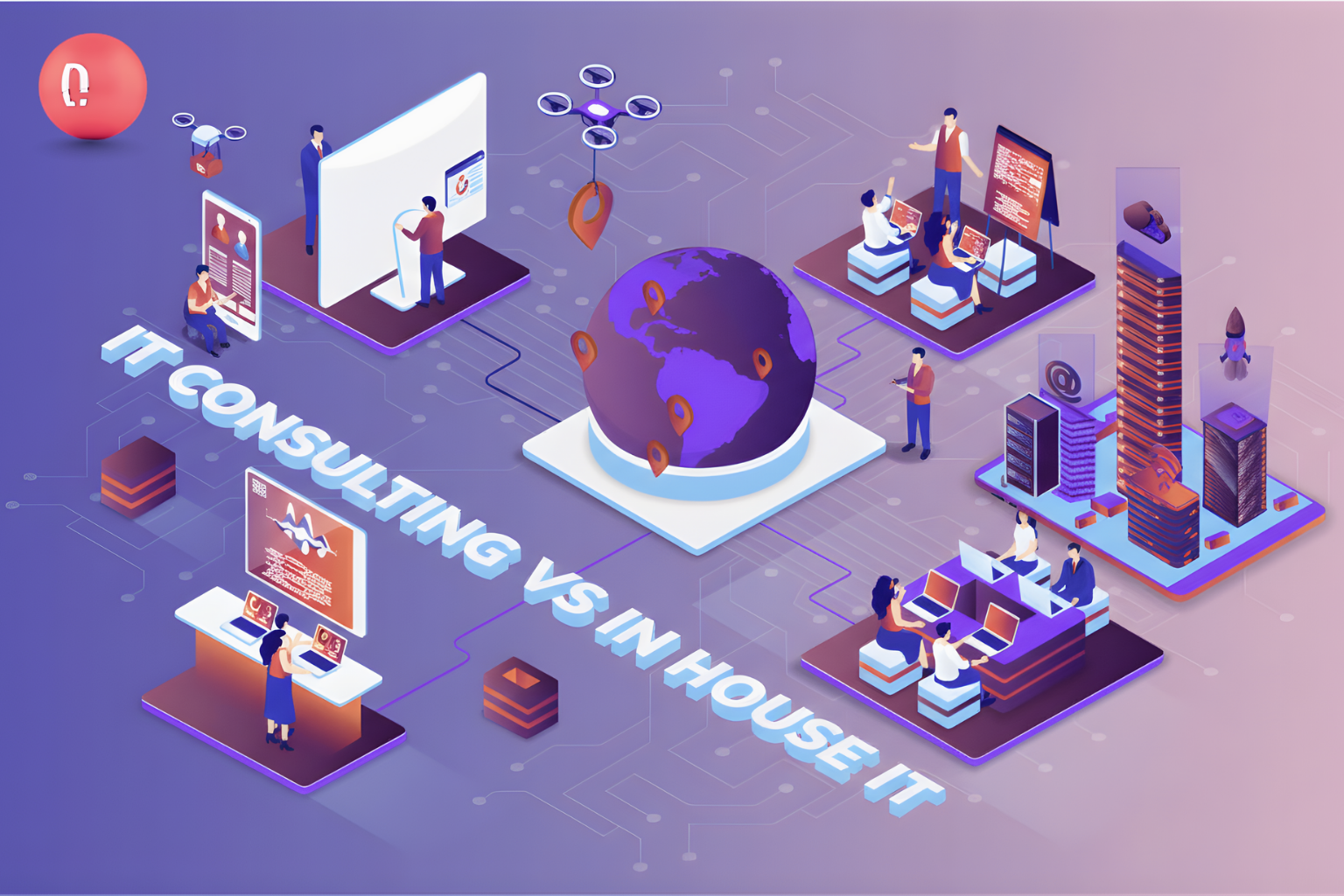
Technology has become the backbone of modern businesses, supporting everything from daily operations to long term strategic growth. Organizations rely on IT systems to manage processes, ensure security, and maintain seamless communication across teams. As businesses scale, the complexity of their technology needs increases, making IT management a critical factor in maintaining efficiency and competitiveness. Deciding how to handle IT is one of the most important financial decisions for growing companies. Many organizations face the choice between building a full in house IT team or leveraging external IT consulting services. Each option comes with distinct advantages, challenges, and costs, which can significantly impact budgets, operational efficiency, and the ability to scale effectively. Understanding these differences is essential for making an informed decision that aligns with both business goals and financial strategy. Understanding In House IT Teams An in house IT team is composed of employees who are fully dedicated to managing a company’s technology. These teams handle day to day support, system maintenance, and resolving internal technical issues. Having an internal team provides direct control and ensures familiarity with the company’s processes and systems. However, building and maintaining a full time IT team can become expensive, especially for growing businesses with evolving technology needs. Costs Associated with In House IT Managing an in house IT team involves more than just hiring staff. Businesses must invest in salaries, tools, training, and infrastructure, while also preparing for unexpected operational challenges. Understanding these costs helps organizations make informed decisions about IT management and budgeting. Salaries and Benefits Maintaining an in house IT team requires significant investment in salaries and benefits. Businesses must offer competitive compensation packages to attract and retain skilled professionals. In addition to salaries, benefits such as health insurance, retirement plans, and paid leave add to the overall cost of keeping an internal team. Tools, Software, and Infrastructure An in house IT team also requires access to the right tools, software, and infrastructure. Businesses need to invest in software licenses, hardware upgrades, and network equipment to ensure smooth operations. These investments are ongoing, as systems require regular updates and maintenance to stay current with business needs. Ongoing Training and Skill Development As technology continues to evolve, IT staff must continuously update their skills through training programs. Ongoing training ensures that employees can manage modern systems, implement new solutions, and address emerging security threats. Without proper training, businesses risk inefficiencies and increased vulnerability. Operational Risks and Hidden Costs Unexpected absences, staff turnover, or skill gaps can disrupt daily IT operations. These disruptions may delay critical projects and increase costs for the organization. Businesses must also plan for contingencies to prevent downtime, which adds hidden expenses beyond salaries and infrastructure. Limitations of In House IT While having an in house IT team offers certain advantages, it also comes with several limitations that can impact efficiency and growth. Understanding these drawbacks helps businesses evaluate whether an internal team alone is sufficient for their technology needs. Limited Specialized Expertise In house teams may not always have deep expertise in specialized areas such as cybersecurity, cloud strategy, or advanced infrastructure. These gaps can prevent organizations from implementing cutting edge solutions or responding effectively to emerging security threats. Without access to specialized skills, businesses may miss opportunities to optimize their technology environment. Focus on Daily Operations Internal IT staff often spend the majority of their time managing day to day tasks such as troubleshooting, system maintenance, and user support. This focus on operational issues leaves little time for strategic planning, long term projects, or proactive improvements that could drive business growth. Resource Constraints for Major Projects Limited team size and resources can slow down the execution of large technology projects, system upgrades, and innovation initiatives. Businesses may face delays or incomplete implementations due to insufficient manpower or expertise within the internal team. Impact on Efficiency and Costs Over time, these limitations can lead to inefficiencies, project delays, and higher overall costs. Businesses may need to hire external experts for complex projects or incur additional expenses to train staff, increasing operational overhead. What Is IT Consulting? IT consulting gives businesses access to external experts who provide guidance on technology decisions and strategy. Consultants focus on planning, implementing, and optimizing technology solutions to meet specific business objectives. They can work on short term projects, such as system upgrades, or provide ongoing advisory support for long term planning. This model offers flexibility and access to specialized expertise without the costs and commitment of maintaining full time IT staff. Costs Associated with IT Consulting Understanding the costs of IT consulting helps businesses make informed decisions about how to manage their technology needs. Unlike in house IT, consulting offers flexibility and access to specialized expertise without long term financial commitments. Project-Based or Service-Based Fees IT consulting costs are usually structured around specific projects or services. Businesses pay for the work completed, such as implementing a new system, upgrading infrastructure, or providing advisory support. This structure allows companies to avoid paying for unused hours or resources, making IT spending more efficient and targeted. Pay Only for the Expertise You Need One of the main advantages of IT consulting is that you only pay for the level of expertise your business requires. Whether you need guidance for a single project or support for complex IT initiatives, consultants provide specialized skills that might be too costly or difficult to maintain in an internal team. No Long Term Salary or Benefits Unlike hiring full time IT staff, consulting does not involve salaries, health benefits, or retirement contributions. This eliminates the financial and administrative burden of long term employee commitments, allowing businesses to access expert knowledge without adding overhead. Predictable and Controllable Expenses IT consulting allows businesses to forecast costs more accurately because fees are agreed upon in advance. This predictability helps companies plan budgets, reduce unexpected expenses, and maintain control over IT spending. Businesses can scale consulting services up or down based on current needs, making this a flexible and cost effective solution. Benefits of
Every time you purchase online or download cloud-based apps, there is a force invisible that powers your experience, which is called data centers. These facilities, which are brimming with infrastructure and servers, serve as the foundation of cloud computing, which allows the digital services that we rely on every day. The market for global data centers, estimated at $217 billion by 2023, is expected to expand by a 10.5 percent CAGR until 2030, driven by the exploding demand for cloud-based services. However, data centers are invisible heroes, providing stability, scalability and security for both businesses as well as consumers.
Dlan.ai blog unpacks the nuts and bolts of cybersecurity to keep your digital world safe! If you’ve been exploring ways to protect your systems, you’ve likely come across terms like Vulnerability Assessment (VA), Penetration Testing (PT), and Red Teaming. They all sound like heavy hitters in the fight against cyberattacks, but what sets them apart? Are they just different flavors of the same thing, or do they serve unique purposes?
In today’s digital world, where hackers seem to lurk around every corner, keeping your systems safe isn’t just smart—it’s essential. We’ve all heard those scary stories about massive data breaches that cost companies millions and ruin reputations overnight. But what if I told you there are proactive ways to stay one step ahead? That’s where Vulnerability Assessment (VA) and Penetration Testing (PT) come into play. These aren’t just buzzwords; they’re powerful tools that help spot weaknesses before the bad guys do.

In today’s digital landscape, cybersecurity is more critical than ever. With cyber threats evolving rapidly, businesses and individuals alike need advanced tools to identify vulnerabilities and secure their systems.
According to recent reports, the global cost of cybercrime is projected to reach $10.5 trillion by 2025, with 73% of successful breaches in 2024 attributed to vulnerable web applications. Regular testing is no longer optional—it’s a necessity.

Running a small business in 2025 is like running a busy highway—exciting, but one wrong move can lead to trouble. With cyberattacks on the rise, keeping your digital assets safe is no longer optional.
Small businesses are prime targets for hackers, with 82% of ransomware attacks hitting them in 2024 (Network Assured). That’s where Vulnerability Assessment (VA) and Penetration Testing (PT) services come in, acting like a GPS to spot risks and guide you to safety. At Dlan.ai, we’re here to help you protect your business with innovative, affordable cybersecurity solutions.
With cyberattacks making headlines daily, businesses must stay one step ahead to protect their digital assets. Two critical cybersecurity practices, Vulnerability Assessment (VA) and Penetration Testing (PT), play unique roles in securing your systems. While both aim to bolster defenses, they differ significantly in their approach and impact. This guide dives into the top five differences between VA and PT, crafted for business owners, IT teams, and anyone looking to understand how these tools can protect their organization. This article will help you decide which strategy fits your needs.
In today’s digital world, where cyber threats loom large, businesses and individuals alike are increasingly concerned about protecting their sensitive data. Cybersecurity terms such as Vulnerability Assessment (VA) and Penetration Testing (PT) frequently appear in discussions about securing systems, but what do they mean? If you’re new to cybersecurity or looking to strengthen your organization’s defenses, this beginner-friendly guide will break down VA and PT in simple terms. We’ll explore their differences, why they matter, and how they can protect your business from the growing wave of cyber threats. Additionally, we’ll include the latest data breach statistics to underscore the importance of robust cybersecurity practices.