






How Custom Software Improves Workflow Automation and Productivity
Modern businesses rely on efficient workflows to stay competitive and meet growing demands. Manual processes, disconnected tools, and repetitive tasks often slow teams down and increase the risk of errors. This is where custom software plays a critical role by automating workflows and improving productivity across the organization.
Custom software is designed around how your business actually operates. Instead of forcing teams to adapt to generic systems, it simplifies daily tasks, connects processes, and allows employees to focus on meaningful work that drives results.
What Is Workflow Automation?
Workflow automation uses software to handle repetitive and rule based tasks with minimal human intervention. It ensures that processes move smoothly from one step to the next without delays or manual effort.
With custom software, workflow automation is built specifically for your business processes. This ensures automation supports your goals rather than limiting how your teams work.
Why Generic Tools Often Fall Short
Generic or off-the-shelf software is designed to serve a wide range of businesses, which limits how well it fits specific workflows. While these tools usually offer basic automation features, they are built for general use rather than tailored business processes. As a result, they often include unnecessary features that add complexity while failing to support critical functions your teams rely on every day.
Because generic tools are not aligned with how your business actually operates, employees are often forced to adjust their workflows or rely on manual workarounds. This reduces the effectiveness of automation and slows productivity instead of improving it. Poor alignment also makes adoption harder, as users may find the software confusing or inefficient for their tasks.
Custom software solves these challenges by focusing only on what matters most to your business. It is designed around your workflows, automates the right processes, and removes unnecessary complexity. This alignment makes automation more effective, improves user adoption, and delivers long term productivity gains that generic tools cannot provide.
How Custom Software Improves Workflow Automation
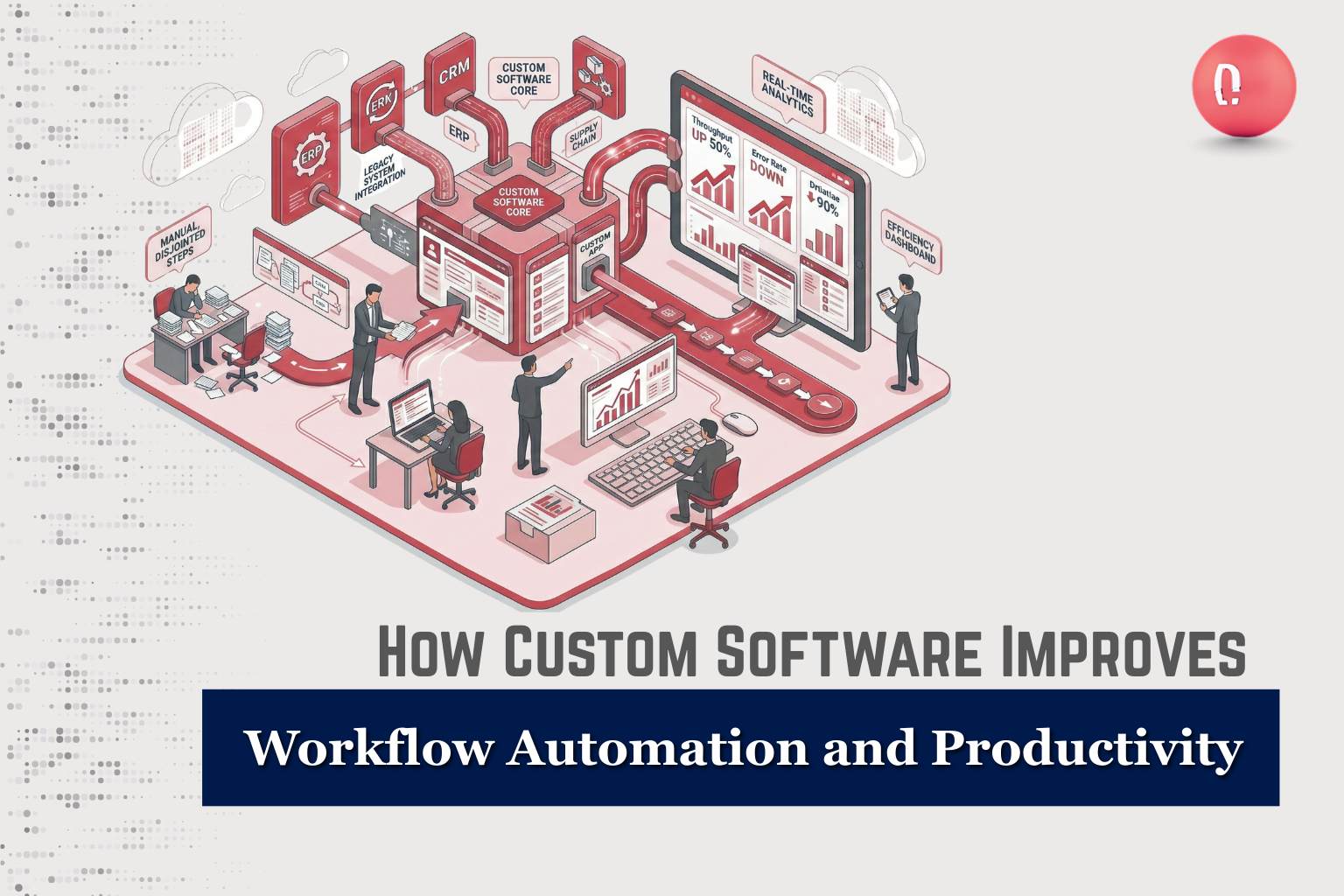
Custom software transforms the way businesses manage daily operations by automating tasks and connecting processes. Instead of relying on manual effort, it creates structured workflows that improve speed, accuracy, and overall efficiency.
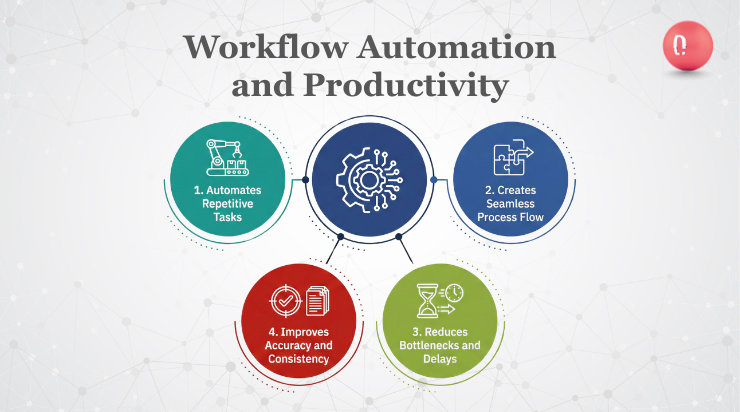
Automates Repetitive Tasks
Custom software can automate routine activities such as data entry, approvals, notifications, and reporting. By removing repetitive manual work, employees save time and can focus on more meaningful tasks. Automation also reduces the risk of human error and ensures that tasks are completed consistently and on schedule.
Creates Seamless Process Flow
Custom solutions connect different systems, teams, and departments into a single, unified workflow. When one task is completed, the next step is automatically triggered without manual intervention. This eliminates delays, improves coordination between teams, and ensures work moves smoothly from start to finish.
Reduces Bottlenecks and Delays
Workflow automation removes the need for constant follow ups and manual handoffs. Tasks progress automatically, approvals are completed faster, and projects remain on track. This helps businesses avoid unnecessary delays and maintain momentum without continuous supervision.
Improves Accuracy and Consistency
Automated workflows follow predefined rules every time, ensuring tasks are completed the same way on each execution. This consistency reduces mistakes, improves reliability, and maintains high quality standards across business operations.
How Custom Software Boosts Productivity
Custom software improves productivity by simplifying how teams work and removing unnecessary obstacles. By aligning technology with daily tasks, it helps employees work faster, collaborate better, and deliver consistent results as the business grows.
Saves Time for Employees
By handling repetitive and time consuming work, custom software allows employees to focus on strategic, creative, and high value tasks. This not only improves efficiency but also increases job satisfaction, as teams spend less time on manual work and more time contributing meaningfully to business goals.
Enhances Collaboration
Custom software can centralize communication, task management, and documentation in one platform. Teams gain better visibility into workflows, responsibilities, and progress, which reduces confusion and improves coordination across departments. Clear collaboration leads to faster execution and better outcomes.
Provides Real Time Insights
With custom dashboards and reporting tools, managers gain real time visibility into workflow performance and productivity. These insights help identify inefficiencies early, track progress accurately, and make informed decisions that improve overall operational efficiency.
Scales with Business Growth
As businesses grow, their workflows and workloads become more complex. Custom software can adapt to new requirements, support additional users, and handle increased demand without disrupting operations. This ensures productivity continues to improve without the need for major system changes or replacements.
Common Workflow Automation Use Cases
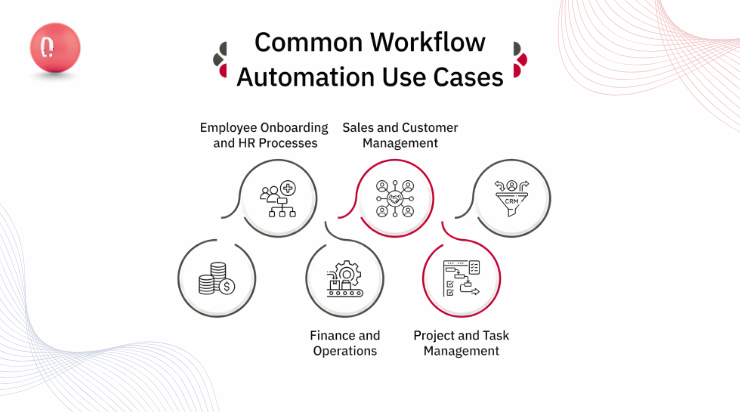
Workflow automation can be applied across multiple business functions to improve efficiency, accuracy, and employee experience. Custom software ensures automation is aligned with real operational needs rather than generic processes.
Employee Onboarding and HR Processes
Custom software can automate employee onboarding, leave approvals, and performance tracking. This reduces administrative workload for HR teams and ensures a smoother, more consistent experience for employees from their first day onward.
Sales and Customer Management
Custom workflows help automate lead tracking, follow ups, and customer communication. By reducing manual data entry and delays, sales teams can focus on building relationships, closing deals faster, and improving customer satisfaction.
Finance and Operations
Automation simplifies invoice processing, approvals, and financial reporting. This reduces delays, minimizes errors, and ensures greater accuracy in financial operations, helping businesses maintain better control over cash flow and compliance.
Project and Task Management
Custom tools ensure tasks are assigned clearly, progress is tracked in real time, and deadlines are met. Automation reduces the need for manual follow ups and keeps projects on schedule with minimal effort.
Why Businesses Choose DLAN for Custom Workflow Automation
DLAN designs custom software solutions that streamline workflows and improve productivity. Their team analyzes existing processes and builds automation that aligns with real business needs. With scalable, secure, and practical solutions, DLAN helps businesses reduce inefficiencies and maximize performance.
Ready to automate your workflows and boost productivity?
Contact DLAN today to explore custom software solutions designed for your business growth.
