







Incident Management & Operational Coordination Services: Building Real-Time Control for Critical Operations
In high-pressure environments, whether it’s managing large-scale operations, handling emergencies, or coordinating multiple teams, clarity and speed are everything. Most organizations struggle not because of lack of resources, but because of lack of coordination, visibility, and structured systems.
This is where modern incident management and operational coordination services come into play. Instead of relying on scattered communication, spreadsheets, or delayed reporting, businesses and agencies can operate through a centralized, real-time system that connects everything—people, data, and decisions.
The Real Challenge: Disconnected Operations
Organizations dealing with complex operations often face the same problems:
- Teams working in silos
- Delayed communication between field and command
- No real-time visibility of resources
- Manual reporting and tracking
These issues create confusion, slow response times, and increase the risk of poor decision-making.
Operational coordination services solve this by creating a single system where everything is visible, trackable, and actionable in real time.
Centralized Command & Control Systems
One of the core services provided is building centralized command systems where all operations are managed from a single interface.
This allows organizations to:
- Monitor activities in real time
- Track incidents, tasks, and updates
- Ensure all stakeholders are aligned
Instead of relying on multiple channels, everything is connected in one place, improving clarity and control.
Systems like these are designed to ensure that everyone sees the same information at the same time, which is critical for fast and accurate decision-making.
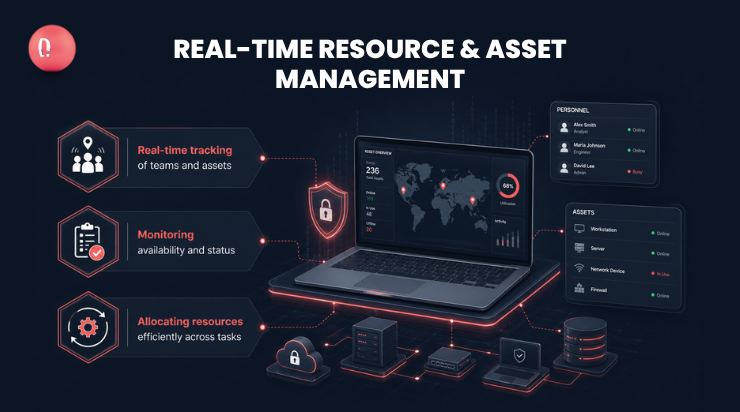
Real-Time Resource & Asset Management
Managing resources during operations is one of the most challenging tasks. Without proper systems, tracking personnel, equipment, and supplies becomes chaotic.
This service focuses on:
- Real-time tracking of teams and assets
- Monitoring availability and status
- Allocating resources efficiently across tasks
Organizations gain full visibility into their resources, allowing them to respond quickly and avoid delays.
Advanced systems enable tracking across multiple locations while maintaining a clear operational overview.
Situation Reporting & Workflow-Based Execution
Another critical service is structured reporting and workflow management. Instead of manual reporting, organizations can generate real-time updates and reports automatically.
This includes:
- Standardized reporting formats
- Approval-based workflows
- Version tracking and documentation
These systems ensure that reporting is not only faster but also consistent and reliable.
Operational workflows are designed to guide teams step-by-step, ensuring that every task is completed correctly and on time.
GIS Mapping & Operational Visibility
One of the most powerful capabilities in operational systems is visual awareness.
Through mapping and visualization services, organizations can:
- View live data on maps
- Track incidents geographically
- Monitor assets and movements in real time
This provides a “big picture” view of operations, helping decision-makers understand situations instantly and act accordingly.
Real-time dashboards and mapping tools transform raw data into actionable insights, improving coordination across teams.
Mobile & Field Operations Enablement
Operations don’t happen only in offices—they happen in the field. That’s why mobile enablement is a key part of these services.
Teams in the field can:
- Submit reports directly from mobile devices
- Capture images, videos, and data
- Work even without internet connectivity
Data collected in the field syncs automatically with the central system, ensuring that decision-makers always have the latest information.
Mobile-first capabilities also allow organizations to track personnel and activities in real time, improving accountability and efficiency.
Custom Workflow Configuration
Every organization operates differently. A one-size-fits-all system rarely works.
These services include building custom workflows tailored to your operations, allowing you to:
- Define your own processes
- Customize forms and reporting structures
- Align systems with your internal hierarchy
This flexibility ensures that the system adapts to your operations—not the other way around.
Seamless Communication Across Teams
Communication breakdown is one of the biggest reasons operations fail.
Operational coordination services create systems where:
- Field teams, command centers, and support units stay connected
- Information flows instantly across departments
- Updates are shared without delays
This eliminates confusion and ensures that everyone is aligned with the current situation.
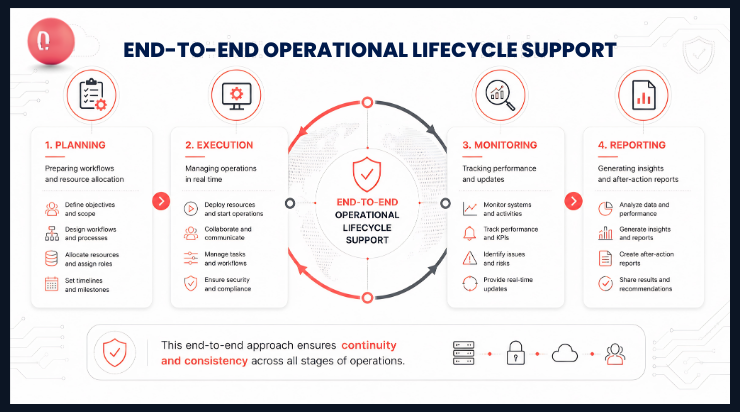
End-to-End Operational Lifecycle Support
These services are not limited to a single phase. They cover the entire operational lifecycle:
- Planning: Preparing workflows and resource allocation
- Execution: Managing operations in real time
- Monitoring: Tracking performance and updates
- Reporting: Generating insights and after-action reports
This end-to-end approach ensures continuity and consistency across all stages of operations.
Industry Applications
Operational coordination systems are used across multiple industries:
- Emergency and disaster management
- Healthcare operations
- Government and public sector
- Utilities and infrastructure
- Large-scale event management
Any organization that deals with complex, multi-team operations can benefit from these services.
Why These Services Matter
When operations are connected, businesses and agencies experience:
- Faster response times
- Better decision-making
- Improved coordination
- Reduced operational risk
Instead of reacting to problems, organizations can operate proactively with full control and visibility.
The Future of Operational Systems
The future of operations lies in connected, real-time systems where information flows instantly and decisions are data-driven.
Organizations that adopt structured operational coordination systems will have a clear advantage in managing complexity, scaling operations, and delivering better outcomes.
Take Control of Your Operations
Managing complex operations without the right system leads to delays, confusion, and missed opportunities. The solution is not more tools—it is a connected operational platform that brings everything together.
If you want to improve visibility, streamline coordination, and gain real-time control over your operations, explore how DLAN.ai can help you build a smarter, more efficient system tailored to your needs.
