







Why DLAN’s Security-First Delivery Model Matters for Modern Businesses
Security isn’t just an IT checkbox anymore. It’s a business requirement because one incident can affect operations, customer trust, brand reputation, and revenue.The biggest shift modern organizations are making is moving from “security at the end” to security by design.That’s the heart of the DLAN security-first approach: building security into delivery from day one, so systems are resilient, trustworthy, and easier to operate long-term.Let’s unpack why this matters and what a security-first delivery model actually looks like.
Security by Design vs. Security by Panic
Security-by-panic is what happens when
- systems ship first, security follows later
- vulnerabilities are discovered after release
- teams scramble to patch under pressure
- customers lose trust
Security-by-design is different. It means:
- risk is assessed early
- security controls are planned into architecture
- teams test and validate continuously
- issues are found before attackers find them
The DLAN security-first approach is built to support security-by-design.
1) Risk Awareness Starts in Planning
Security-first delivery begins before development, with questions like:
- What data is sensitive?
- Who should access it, and how?
- What could go wrong (and what would it cost)?
- What’s the acceptable risk level?
DLAN helps organizations define security requirements early because it’s cheaper and safer to design security than retrofit it later.
2) Secure Architecture That Reduces Attack Surface
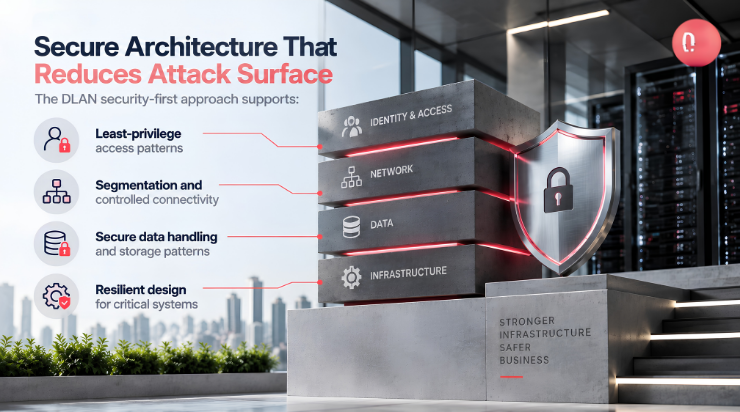
Many breaches don’t happen because someone wrote “bad code.” They happen because systems were designed without enough guardrails. The DLAN security-first approach supports:
- least-privilege access patterns
- segmentation and controlled connectivity
- secure data handling and storage patterns
- resilient design for critical system
A smaller attack surface means fewer opportunities for failures.
3) Secure Development Practices That Scale
Security isn’t a single tool it’s a consistent set of habits. DLAN supports secure development practices such as:
- secure coding discipline
- peer reviews and quality checks
- dependency awareness and vulnerability reduction
- validation patterns and error handling that prevent exploits
Security-first delivery makes secure practices repeatable, even as teams grow.
4) Continuous Testing and Validation
The DLAN security-first approach emphasizes continuous validation because security is never “done.”
That includes:
- ongoing testing during delivery cycles
- proactive identification of weak points
- fast remediation workflows
- documented learnings so mistakes don’t repeat
This reduces the odds of security issues reaching production environments.
5) Protecting Trust: The Real Business Outcome
Security isn’t only about avoiding bad outcomes. It’s about enabling good ones:
- customers trust you with their data
- partners feel confident integrating with you
- leadership feels confident scaling systems
- teams deploy faster because guardrails exist
The DLAN security-first approach helps organizations protect trust because trust is hard to earn and easy to lose.
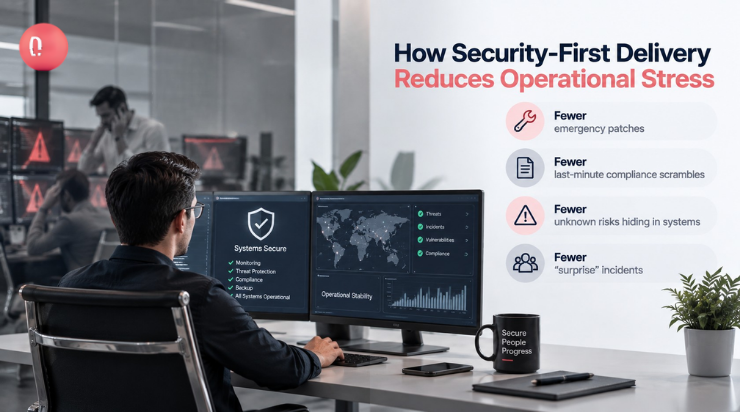
How Security-First Delivery Reduces Operational Stress
One underrated benefit of security-first delivery is calm.
When security is built in:
- fewer emergency patches
- fewer last-minute compliance scrambles
- fewer unknown risks hiding in systems
- fewer “surprise” incidents
Security-first isn’t just safer it’s operationally smarter.
FAQ: DLAN Security-First Approach
What is the DLAN security-first approach?
The DLAN security-first approach is a delivery model that embeds security into planning, architecture, development, and operational readiness so systems are secure by design.
How does security-first reduce breach risk?
By reducing attack surface, enforcing least privilege, validating continuously, and addressing risks early before issues become incidents.
Does security-first slow down delivery?
When implemented correctly, security-first often improves speed long-term by reducing rework, preventing last-minute fixes, and enabling confident releases.
