







Data Center Readiness: Why Enterprises Need Strong Infrastructure Before Scaling Digital Operations
Modern businesses depend on technology every hour of the day. Customer platforms, internal systems, cloud applications, databases, communication tools, cybersecurity systems, and reporting dashboards all need a reliable infrastructure foundation. When this foundation is weak, the whole business feels the impact. Applications slow down, employees face repeated disruptions, data becomes harder to protect, and growth becomes more expensive than it should be.
This is why data center readiness has become an important discussion for enterprises, SMEs, and growing digital businesses. A data center is no longer just a technical facility where servers are placed. It is the operational backbone of the organization. It supports business continuity, data security, application performance, compliance, customer experience, and future expansion.
Many businesses invest in new software, cloud platforms, AI tools, and digital systems without first checking whether their infrastructure can support them. This creates hidden risk. A company may appear digitally advanced on the surface, but behind the scenes, its infrastructure may be struggling with limited capacity, poor cooling, weak power planning, outdated networking, poor redundancy, or unclear disaster recovery processes.
Data center readiness helps businesses avoid these problems. It gives leadership and IT teams a clear understanding of whether the current environment is stable, scalable, secure, and ready for the next stage of growth.
What Does Data Center Readiness Mean?
Data center readiness means evaluating whether your infrastructure can support current and future business needs. It is not only about checking servers or storage. It includes power, cooling, cabling, network design, physical security, fire protection, access control, monitoring, backup, disaster recovery, compliance, documentation, and operational management.
A ready data center should be able to answer important questions:
Can the business operate smoothly if demand increases?
Can systems remain available during hardware failure?
Is sensitive data protected from unauthorized access?
Can the infrastructure support hybrid cloud or multi-cloud systems?
Are backup and recovery processes tested?
Can the business meet compliance and audit requirements?
Is there enough capacity for future applications and users?
If the answer to these questions is unclear, the business may be carrying infrastructure risk without realizing it.
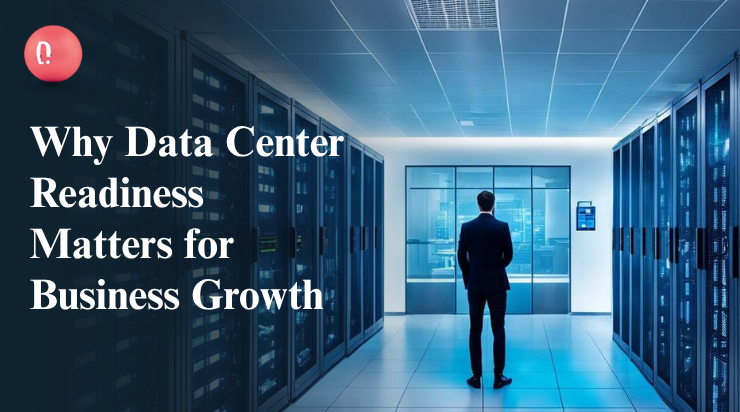
Why Data Center Readiness Matters for Business Growth
Growth puts pressure on infrastructure. As a business expands, it adds more users, applications, devices, data, locations, and security requirements. A setup that worked for 50 employees may not work for 500. A server room that supported basic operations may not support advanced analytics, cloud integration, customer portals, or high-availability systems.
Without proper readiness planning, growth can create operational problems. Systems may become slow during peak hours. Storage may run out faster than expected. Backup processes may fail when needed. Security controls may become harder to manage. IT teams may spend more time fixing problems than enabling innovation.
Data center readiness prevents growth from becoming chaotic. It helps businesses scale with control. Instead of reacting to issues after they appear, the organization can plan capacity, improve resilience, and align infrastructure with business goals.
Key Areas of Data Center Readiness
A strong data center readiness assessment should cover several important areas.
1. Power and Electrical Capacity
Power is one of the most important parts of any data center. Servers, storage systems, network devices, firewalls, cooling systems, monitoring equipment, and backup systems all depend on stable power.
Businesses must check whether their current power setup can support future growth. This includes power distribution, UPS capacity, backup generators, electrical safety, redundancy, and maintenance planning.
If power planning is weak, even a small failure can stop critical systems. Strong electrical design helps reduce downtime and supports long-term reliability.
2. Cooling and Environmental Control
Technology equipment generates heat. If cooling is not properly designed, equipment may overheat, perform poorly, or fail early. Cooling is especially important as businesses add more servers, storage, and high-density equipment.
A readiness assessment should review airflow, temperature control, humidity control, cooling capacity, rack layout, and environmental monitoring. Poor airflow can waste energy and create hot spots inside racks.
Good cooling design improves performance, reduces equipment stress, and helps control operational costs.
3. Network Architecture
The data center network connects systems, users, applications, security tools, cloud platforms, and business locations. A weak network design can create slow performance, bottlenecks, security gaps, and poor visibility.
A ready data center should have a structured network architecture with proper segmentation, redundancy, firewall placement, routing, switching, monitoring, and secure access controls.
As businesses adopt cloud, remote work, SaaS platforms, and digital services, the network becomes even more important. It must be fast, secure, and scalable.
4. Redundancy and High Availability
Downtime can damage productivity, customer trust, and revenue. That is why redundancy is a key part of data center readiness.
Redundancy means critical systems have backup components. If one system fails, another can take over. This may include redundant power, network paths, internet connections, storage systems, firewalls, and backup servers.
High availability does not happen by accident. It must be designed into the infrastructure from the beginning. A readiness review helps identify single points of failure before they become business problems.
5. Security and Access Control
Data centers hold critical business assets. Physical security and digital security both matter.
Physical security includes controlled access, visitor logs, surveillance, locked racks, fire detection, and environmental monitoring. Digital security includes identity access management, network segmentation, firewalls, monitoring, encryption, logging, and threat detection.
Businesses should also review who has access to infrastructure and whether that access is still required. Over time, old permissions can create security gaps.
A secure data center protects business systems from both external attacks and internal mistakes.
6. Backup and Disaster Recovery
Backups are only useful if they work when needed. Many businesses have backup tools but do not regularly test recovery. This creates false confidence.
A data center readiness assessment should check backup frequency, storage location, recovery time, recovery point objectives, restoration testing, and disaster recovery documentation.
The goal is not only to save data. The goal is to restore business operations quickly after failure, cyberattack, accidental deletion, or system outage.
7. Compliance and Documentation
Industries such as healthcare, banking, education, government, telecom, and energy often face strict compliance requirements. Even businesses outside regulated industries need proper documentation for audits, risk reviews, vendor management, and internal control.
A ready data center should have clear documentation for infrastructure layout, asset inventory, network design, access control, backup policies, security controls, maintenance schedules, and incident response procedures.
Documentation helps teams troubleshoot faster, onboard new staff, pass audits, and reduce dependency on individual employees.
Common Signs Your Data Center Is Not Ready
Many businesses do not know their data center needs improvement until problems become visible. Warning signs include repeated outages, slow application performance, limited storage, overloaded servers, outdated hardware, weak monitoring, unclear documentation, poor backup testing, high energy costs, and frequent emergency fixes.
Another sign is when every new business request becomes difficult for IT. If adding users, applications, or capacity requires major manual effort, the infrastructure may not be scalable.
When infrastructure becomes a barrier to business growth, it is time to review readiness.
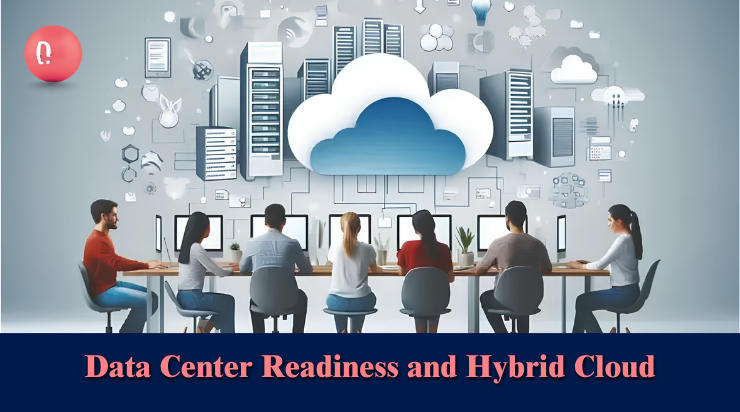
Data Center Readiness and Hybrid Cloud
Many organizations now use a mix of on-premises infrastructure, private cloud, public cloud, and SaaS tools. This hybrid model offers flexibility, but it also increases complexity.
A business must make sure its data center can connect securely and efficiently with cloud platforms. This includes network performance, identity management, data movement, backup strategy, monitoring, and security policy alignment.
Without readiness planning, hybrid cloud environments can become fragmented. Teams may struggle with visibility, compliance, cost control, and performance. A strong data center foundation helps hybrid systems work smoothly.
Why Independent Validation Matters
Sometimes businesses design or upgrade data centers based on vendor recommendations alone. While vendors are important, independent validation gives leadership a second layer of assurance.
Independent validation reviews whether mechanical, electrical, network, and IT designs meet business needs. It can identify gaps before money is spent on major implementation. This helps reduce risk, control cost, and avoid design mistakes.
For large infrastructure projects, early validation can protect capital investment and improve executive confidence.
How Businesses Should Start
The best starting point is a structured readiness assessment. This should include current infrastructure review, business requirement analysis, risk identification, capacity planning, and improvement recommendations.
Businesses should not wait until a major failure occurs. Data center readiness should be part of digital planning, especially before cloud migration, system modernization, AI adoption, cybersecurity upgrades, or business expansion.
A practical roadmap should prioritize the most critical improvements first. Not every upgrade needs to happen at once. The goal is to build a phased plan that improves reliability, security, and scalability without unnecessary disruption.
How Data Center Readiness Supports Managed Operations
A strong data center also supports better managed services. When infrastructure is properly designed, monitored, documented, and maintained, support teams can identify problems faster and manage operations with greater accuracy.
This is especially important for organizations that want proactive technology support instead of emergency fixes. Managed operations depend on visibility. If the infrastructure is disorganized, undocumented, or difficult to monitor, even skilled support teams may struggle to respond quickly.
A ready data center makes daily IT management smoother. It improves monitoring, reduces confusion, and gives teams a better foundation for maintenance and optimization.

Cybersecurity Depends on Infrastructure Strength
Cybersecurity is often discussed as a separate function, but it depends heavily on infrastructure quality. Weak network design, poor access control, outdated systems, and limited logging can make even advanced security tools less effective.
A strong data center supports cybersecurity services by improving visibility, segmentation, monitoring, and response readiness. It allows security teams to understand where critical assets are located, who can access them, and how threats can move through the environment.
This is why security should be part of infrastructure planning from the beginning. Businesses should not build first and secure later. A secure-by-design approach reduces risk and improves long-term resilience.
Data Center Readiness for Different Industries
Different industries have different infrastructure requirements. A healthcare organization may need strict data protection, system uptime, and patient record availability. An enterprise company may need scalable systems that support multiple departments, locations, and applications. A bank may require strong security, audit controls, transaction reliability, and compliance reporting.
For healthcare environments, data center readiness supports privacy, availability, and secure access to critical systems. For enterprise organizations, readiness supports complex operations, distributed teams, and long-term digital expansion. For banking, readiness supports secure systems, reliable transactions, and stronger governance.
The same principle applies across all sectors: infrastructure must match the business risk, operating model, and growth plan.
The Link Between Data Center Readiness and Governance
A mature infrastructure environment should support governance, risk, and compliance expectations. Businesses need to know where their data is stored, how systems are protected, which controls are active, and how incidents will be handled.
Data center readiness supports governance risk and compliance by improving documentation, access control, risk visibility, audit readiness, and operational accountability.
Without clear infrastructure records, compliance becomes harder. Teams may not know which systems are critical, which controls are missing, or whether backup and recovery processes are actually reliable. A well-prepared data center makes governance more practical and less reactive.
Supporting Telecom and Connectivity Needs
Modern infrastructure also depends on strong connectivity. Business systems need stable network links, reliable communication paths, and secure connections between offices, users, applications, and cloud systems.
This is where telecommunications planning becomes important. If connectivity is weak, even a well-designed data center may not deliver the expected performance. Users may experience delays, branch offices may struggle with access, and cloud workloads may become harder to manage.
A readiness review should therefore include telecom and network connectivity. Businesses need to understand bandwidth, redundancy, latency, security, and failover options before scaling digital operations.
Data Center Readiness and Software Growth
As businesses launch new systems, customer portals, internal platforms, and automation tools, infrastructure must be ready to support those applications. Poor infrastructure can make good software perform badly.
Strong readiness planning supports software solutions by giving applications the performance, security, availability, and scalability they need. This helps developers and business teams build with confidence.
When infrastructure and software planning work together, the business avoids delays, performance issues, and expensive redesigns.
Final Thoughts
A strong digital business needs strong infrastructure behind it. Data center readiness helps organizations understand whether their current environment can support growth, security, compliance, and operational continuity.
It reduces guesswork, improves planning, and gives leadership better visibility into infrastructure risks. More importantly, it helps businesses scale without turning technology into a daily challenge.
DLAN supports enterprises and growing businesses with data center consultancy, design validation, technology integration, project management, security planning, and infrastructure modernization. With the right readiness strategy, a data center becomes more than a technical facility. It becomes a secure and scalable foundation for long-term digital success.
