







Business networks have changed. Employees are no longer working from one office, using one network, and accessing one internal system. Today, businesses use cloud applications, remote teams, mobile devices, SaaS platforms, third-party tools, and hybrid infrastructure. This change has made traditional network security weaker. For many years, companies used VPNs to give employees remote access to business systems. But VPNs were designed for a different time. They often give broad access to internal networks, create performance issues, and become difficult to manage when users, devices, and cloud applications increase. This is why more businesses are now moving toward SASE and Zero Trust. SASE, also known as Secure Access Service Edge, brings networking and security together in a cloud-based model. Zero Trust follows a simple but powerful idea: never trust automatically, always verify. Together, they help businesses protect users, applications, data, and cloud systems from modern cyber threats. For companies that want stronger security, better performance, and safer remote access, SASE and Zero Trust are no longer optional. They are becoming part of the modern security foundation. What Is SASE? SASE stands for Secure Access Service Edge. It is a modern security and networking model that combines network connectivity with security services in one cloud-based architecture. Cloudflare defines SASE as a model that unifies network connectivity and network security functions onto a single cloud-based platform. Microsoft also describes SASE as a cloud-based architecture that brings WAN and network security services together into one unified platform. In simple words, SASE helps businesses secure access to applications, users, devices, cloud systems, and branch offices without depending only on old perimeter-based security. A SASE model can include: The goal is to give users secure access from anywhere while keeping business data protected. What Is Zero Trust? Zero Trust is a cybersecurity strategy based on continuous verification. It does not automatically trust users, devices, or applications just because they are inside the company network. Palo Alto Networks explains Zero Trust as a strategy that removes implicit trust and requires access control, content inspection, and traffic logging before access is granted. This means every access request should be checked based on identity, device health, location, behavior, application sensitivity, and risk level. Zero Trust focuses on: The goal is not to make access difficult. The goal is to make access safer. Why VPNs Are No Longer Enough VPNs were useful when most business systems were inside company offices or private data centers. But today, business technology is more distributed. Employees may access company systems from home, client sites, airports, mobile devices, or different countries. Applications may be hosted in public cloud, private cloud, SaaS platforms, or on-premises systems. Traditional VPNs create several problems in this environment. First, VPNs often give users broad access to the internal network. If a user account is compromised, an attacker may move deeper into the business environment. Second, VPNs can become slow when many users connect at the same time. This affects productivity and user experience. Third, VPNs are harder to manage across cloud applications, remote teams, contractors, and multiple business locations. Fourth, VPNs do not always provide strong visibility into user behavior, device risk, or application-level access. Zero Trust Network Access, or ZTNA, solves many of these problems by giving users access only to the specific applications and services they are approved to use. Palo Alto Networks explains that ZTNA provides secure remote access based on defined access control policies and defaults to deny instead of giving broad LAN access. Why SASE and Zero Trust Work Better Together SASE and Zero Trust are powerful because they solve different parts of the same security challenge. Zero Trust defines the security principle: do not trust automatically, verify continuously. SASE provides the architecture that helps deliver secure access across users, networks, cloud platforms, and applications. Together, they help businesses protect modern digital environments where employees, customers, applications, and data are no longer located in one place. For example, a company can use Zero Trust to verify user identity and limit access. SASE can then enforce those security policies through cloud-based security services, secure web access, data protection, and network controls. This creates a stronger security model for: Instead of protecting only the office network, businesses can protect every access point. Why This Matters for Modern Businesses Cybersecurity is no longer only about firewalls and antivirus software. Modern attacks often target identity, access, cloud applications, and user behavior. Attackers may steal employee passwords, trick users through phishing, exploit weak remote access, or move laterally inside networks after gaining entry. SASE and Zero Trust reduce these risks by controlling who can access what, from where, and under which conditions. This is especially important for businesses in healthcare, banking, education, government, telecom, energy, and enterprise environments where data protection and compliance are critical. DLAN already serves industries such as healthcare, enterprise, education, banking, government, and power sector organizations, making this topic highly relevant for the website. Key Benefits of SASE and Zero Trust 1. Stronger Remote Access Security SASE and Zero Trust allow employees to access business applications securely without exposing the entire internal network. This reduces the risk of unauthorized access. 2. Better Protection for Cloud Applications Modern businesses use cloud platforms every day. SASE helps protect cloud traffic, SaaS applications, and data movement with centralized security policies. 3. Reduced Attack Surface Zero Trust limits user access to only what is needed. This reduces the number of systems an attacker can reach if one account is compromised. 4. Improved User Experience Instead of routing all traffic through a slow VPN, SASE can connect users through cloud-based security points closer to them. This can improve speed and reliability. 5. Centralized Policy Management Businesses can manage access, security, and network policies from one place instead of handling multiple disconnected tools. 6. Better Compliance Support SASE and Zero Trust help businesses improve access control, traffic monitoring, logging, and data protection. These are important for compliance and audit readiness. 7. Safer Hybrid Work Whether employees work from the office,
Artificial intelligence is no longer just a future technology. It is already becoming part of daily business operations. Companies are using AI for customer support, data analysis, automation, marketing, cybersecurity, recruitment, reporting, decision-making, and internal productivity. But as AI adoption grows, so does the risk. Many businesses are using AI tools without clear policies, proper access control, data protection rules, or compliance oversight. Employees may enter sensitive business data into public AI platforms. Teams may use AI-generated content without review. Companies may depend on automated decisions without understanding how those decisions are made. Vendors may also add AI features into software without giving full visibility into how data is processed. This is why AI governance and compliance have become critical for modern businesses. AI governance is the process of managing how artificial intelligence is used across an organization. It helps businesses define rules, reduce risks, protect data, improve transparency, and use AI responsibly. AI compliance ensures that AI systems follow legal, ethical, security, and industry requirements. For growing companies, AI governance is not only about avoiding risk. It is about building trust, improving security, and making sure AI supports business growth in a safe and controlled way. What Is AI Governance? AI governance is a structured approach for managing artificial intelligence across the business. It defines how AI tools are selected, used, monitored, secured, and reviewed. A good AI governance strategy answers important questions such as: Without governance, AI adoption can become uncontrolled. Different teams may start using different tools without IT, legal, security, or leadership oversight. This creates what many experts call “shadow AI,” where employees use AI systems without official approval or visibility. Shadow AI can expose sensitive data, increase compliance risk, and create security gaps. That is why businesses need clear AI policies before scaling AI across departments. What Is AI Compliance? AI compliance means making sure that AI systems follow relevant laws, regulations, industry standards, internal policies, and ethical requirements. AI compliance may include: Different industries may have different requirements. A healthcare company using AI must think about patient data. A financial services company must think about automated decisions and fraud detection. A recruitment company must think about fairness and bias. A government contractor must think about security, accountability, and audit readiness. This is why AI compliance cannot be treated as a simple checklist. It must be built into the company’s governance, cybersecurity, data management, and risk strategy. Why AI Governance Matters Now AI is moving faster than traditional business policies. Many companies are already using AI before they have proper governance in place. This creates several risks. First, there is the risk of data exposure. Employees may accidentally share confidential information, customer data, financial records, source code, legal documents, or internal business plans with AI tools. Second, there is the risk of inaccurate outputs. AI systems can produce wrong, outdated, biased, or incomplete information. If teams use these outputs without review, the business may make poor decisions. Third, there is the risk of compliance failure. AI-related regulations and standards are developing quickly. Businesses that do not prepare early may face future legal, financial, or reputational problems. Fourth, there is the risk of cyberattacks. AI systems can be targeted through prompt injection, data poisoning, model manipulation, credential misuse, and unauthorized access. NIST’s AI Risk Management Framework focuses on helping organizations better manage AI risks across individuals, organizations, and society. This shows that AI risk is not only a technical issue. It is also a governance, trust, and business management issue. The Link Between AI Governance and Cybersecurity AI governance and cybersecurity are closely connected. Any business using AI must think about how AI tools access, process, store, and generate data. For example, if employees use AI chatbots to summarize customer documents, the business must know whether that data is being stored, reused, or exposed. If developers use AI coding tools, the company must check whether sensitive code or credentials are being shared. If AI is connected to business applications, the company must control what actions the AI can perform. Cybersecurity teams must now protect not only networks, endpoints, and cloud systems, but also AI workflows, prompts, datasets, models, and third-party AI tools. AI security should include: A strong AI governance framework helps security teams understand where AI is being used and what risks need to be controlled. The Role of Data Governance in AI AI depends on data. If the data is sensitive, inaccurate, biased, outdated, or poorly protected, the AI output can create serious problems. This is why data governance is a key part of AI governance. Data governance defines how data is collected, stored, classified, accessed, protected, and used. Before a company scales AI, it must understand what data it has, where it lives, who can access it, and how it should be protected. Good data governance helps businesses: Without strong data governance, AI systems may create more risk than value. AI Governance and GRC Governance, Risk, and Compliance, also known as GRC, plays a major role in responsible AI adoption. AI governance should not be handled separately from the company’s broader risk management strategy. It should be connected with cybersecurity policies, compliance programs, internal controls, vendor management, and business continuity planning. A strong AI GRC approach includes: This helps leadership understand how AI is being used, what risks exist, and what controls are needed. For businesses, the goal is not to stop AI adoption. The goal is to make AI adoption safer, smarter, and more aligned with business goals. Common AI Risks Businesses Should Manage AI creates many opportunities, but it also brings risks that companies must manage carefully. 1. Data Privacy Risk Employees may enter confidential or personal data into AI tools without knowing how that data will be stored or used. 2. Security Risk AI systems can be attacked, manipulated, or connected to sensitive systems without proper controls. 3. Bias Risk AI tools can produce unfair or biased outputs if the training data or system design is flawed. 4. Accuracy
Imagine running a business where every department, finance, sales, HR, and operations, operates in perfect sync. Decisions are instant, data-driven, and accurate, inventory never runs out, and your team collaborates seamlessly from anywhere in the world. This is not a futuristic dream; it’s what cloud ERP solutions make possible today. At DLAN, we help businesses replace outdated, fragmented systems with intelligent, cloud-based ERP platforms that streamline operations, optimize resources, and fuel growth. But understanding the real value of cloud ERP goes beyond software; it’s about creating a smarter, more agile organization. Why Cloud ERP Is No Longer Optional Businesses that rely on disconnected tools face hidden costs: Studies show that companies using cloud ERP see up to 30% higher operational efficiency and 25% faster decision-making. Essentially, ERP doesn’t just manage processes, it transforms the way your business works. Key Trends in Cloud ERP to Watch in 2026 Modern ERP systems are evolving rapidly. Organizations adopting cutting-edge features gain a competitive edge: By staying on top of these trends, businesses can react faster to market changes, save costs, and improve operational agility. How Cloud ERP Improves Business Efficiency A cloud ERP platform is not just about software—it’s about creating a streamlined, intelligent organization. Here’s how it helps: Example: A mid-sized retail chain using cloud ERP reduced stockouts by 40% while cutting excess inventory by 20%—a direct boost to revenue and efficiency. Real-World Cloud ERP Success Stories 1. Manufacturing IndustryA global manufacturer implemented DLAN’s cloud ERP to integrate supply chain, production, and finance. Result: 30% faster production cycles and 25% lower inventory costs, improving profitability. 2. Healthcare SectorHospitals adopted ERP to unify patient records, procurement, and staffing. This led to better patient care, reduced operational errors, and faster reporting. 3. Retail & E-CommerceRetailers leveraged ERP to track stock across multiple locations and optimize logistics. They achieved faster order fulfillment and higher customer satisfaction, boosting repeat sales. 4. Finance & BankingBanks integrated ERP for compliance reporting and branch operations. The result was higher accuracy, streamlined audits, and enhanced regulatory compliance. These examples prove that cloud ERP works across industries, delivering measurable results. Steps to Successfully Implement Cloud ERP Implementing ERP isn’t plug-and-play—it’s a strategic transformation. Companies can follow these steps for success: Following these steps ensures smooth adoption and a high return on investment. Future of Cloud ERP: Smarter, Faster, More Predictive The next generation of ERP is intelligent, adaptive, and predictive: Businesses adopting this ERP vision will stay ahead of competition, improve efficiency, and scale faster than ever. Why DLAN Is Your Ideal Cloud ERP Partner DLAN doesn’t just implement ERP; we transform your operations into an agile, intelligent business engine. Our solutions: With DLAN, businesses get an ERP that is adaptive, future-ready, and aligned with growth objectives. Take the Next Step in Your Digital Transformation Cloud ERP isn’t just a technology upgrade—it’s a business evolution. With DLAN’s solutions, companies can: Contact DLAN today and explore how our cloud ERP solutions can transform your business into a smart, agile, and competitive enterprise.
Unexpected disruptions are no longer rare events. From system outages and operational failures to natural disasters and large-scale emergencies, businesses today must be prepared to continue operating under any condition. The difference between organizations that survive disruption and those that struggle often comes down to one thing how well they are prepared to respond and recover. Many companies believe they are ready because they have backup plans or written procedures. However, when disruption actually occurs, these static plans often fail due to lack of coordination, limited visibility, and slow execution. This is where business continuity and disaster recovery services become essential. They transform traditional planning into structured, real-time operational systems that ensure continuity, control, and resilience. Understanding Business Continuity in Modern Operations Business continuity is not just about having a backup or contingency plan. It is about ensuring that critical operations continue without interruption, even when systems or environments fail. Modern continuity services focus on identifying essential business functions and building systems that support them during disruptions. This includes ensuring that teams know their roles, resources are available, and workflows can continue seamlessly. Instead of relying on documents that may or may not be followed during a crisis, continuity systems provide live execution frameworks that guide teams step by step. Why Traditional Disaster Recovery Approaches Fall Short Traditional disaster recovery often focuses only on restoring systems after failure. While recovery is important, it does not address the challenges that occur during the disruption itself. Organizations often face: These issues can significantly increase downtime and operational impact. Business continuity and disaster recovery services take a broader approach. They not only focus on recovery but also ensure that operations continue during the disruption, minimizing downtime and maintaining control. Strategic Continuity Planning Services A strong continuity strategy begins with proper planning. This involves analyzing the organization’s operations, identifying vulnerabilities, and defining response strategies for different scenarios. Continuity planning services help businesses: These plans are then converted into actionable systems that can be activated instantly when needed. The goal is to remove uncertainty. When disruption occurs, teams should not be figuring out what to do—they should be following a clear, structured process. Disaster Recovery System Design and Execution Recovery is a critical part of continuity. However, without a structured system, recovery efforts can become chaotic and inefficient. Disaster recovery services focus on building systems that ensure smooth and controlled restoration of operations. This includes designing workflows for system recovery, data restoration, and operational restart. Instead of reacting to failures, organizations can execute predefined recovery processes that are optimized for speed and efficiency. This reduces downtime and ensures that operations return to normal as quickly as possible. Real-Time Incident Response and Coordination During a disruption, time is one of the most critical factors. Delayed response can lead to increased losses and operational challenges. Continuity services provide systems that enable real-time incident tracking and response coordination. Teams can log incidents, assign tasks, and monitor progress as events unfold. This creates a centralized environment where all activities are visible and manageable. Decision-makers can access real-time information and respond quickly. By eliminating delays and improving coordination, organizations can manage disruptions more effectively. Resource Visibility and Allocation In any crisis situation, managing resources efficiently is essential. Organizations need to know what resources are available, where they are located, and how they are being used. Business continuity services provide real-time resource management capabilities. This ensures that personnel, equipment, and supplies are allocated effectively. With full visibility, organizations can avoid duplication, reduce delays, and ensure that critical tasks are supported properly. Efficient resource management plays a key role in maintaining operations during disruptions. Communication and Information Flow Communication breakdown is one of the most common causes of operational failure during disruptions. When teams do not have access to consistent and timely information, confusion and delays occur. Continuity services implement structured communication systems that ensure information flows smoothly across the organization. Updates are shared in real time, and all stakeholders have access to the same information. This reduces uncertainty and improves coordination. Clear communication also helps maintain confidence among teams, allowing them to focus on execution rather than uncertainty. Reporting, Documentation, and Compliance Accurate reporting is essential during and after disruptions. It helps organizations understand what happened, evaluate performance, and improve future responses. Continuity services include systems for real-time reporting and standardized documentation. This ensures that all actions are recorded and can be reviewed later. Organizations can generate reports quickly, maintain compliance with regulations, and use insights to strengthen their processes. This structured approach to reporting improves transparency and accountability. Testing, Simulation, and Continuous Improvement A continuity plan is only effective if it works in real scenarios. Testing and simulation services play a critical role in ensuring readiness. Organizations can run simulated scenarios to test their workflows, identify gaps, and improve their systems. Regular testing builds confidence and ensures that teams are prepared for actual disruptions. Continuous improvement is a key part of these services. Systems are updated based on insights and changing business needs, ensuring that they remain effective over time. Customization Based on Business Needs Every organization has unique operations and risks. Business continuity services are designed to be flexible and adaptable. Custom workflows can be created based on specific processes, industry requirements, and organizational structures. This ensures that continuity systems are practical and aligned with real-world operations. Instead of forcing businesses to adapt to rigid systems, these services adapt to the business. Building Long-Term Operational Resilience Business continuity is not just about surviving disruptions—it is about building resilience. Organizations that invest in continuity services are better equipped to handle uncertainty. They can respond quickly, recover efficiently, and maintain operations under challenging conditions. Resilience becomes a strategic advantage, enabling businesses to operate confidently in a rapidly changing environment. Strengthen Your Operations for the Unexpected Disruptions are inevitable, but their impact can be controlled. The key lies in having systems that are prepared, responsive, and efficient. Business continuity and disaster recovery services provide the structure and tools needed to manage
Moving to the cloud can feel like a “big switch” you flip—until you’re in it. Suddenly you’re juggling migrations, security questions, cost spikes, performance issues, and a long list of people asking, “Is this actually better than what we had before?” That’s exactly why DLAN cloud solutions focus on more than just moving workloads. DLAN helps organizations move with a plan, modernize with purpose, and scale with control—so the cloud becomes a business advantage, not a monthly surprise. Let’s break down what that looks like in real terms. What “Moving to the Cloud” Should Really Mean A successful cloud journey isn’t just about location (data center → cloud). It’s about outcomes: DLAN cloud solutions are designed around these outcomes—so cloud adoption is measurable, manageable, and aligned with business priorities. 1) Cloud Migration That Starts With Readiness (Not Guesswork) Cloud migration gets risky when teams rush in without understanding what they’re moving, why they’re moving it, and what “done” even means. DLAN helps organizations start with clarity by focusing on: Workload Discovery and Prioritization Not everything should move first (or move at all). DLAN helps map workloads by: Migration Strategy That Fits Your Reality Instead of pushing a single approach, DLAN cloud solutions support phased migration strategies that can include: Landing Zone and Foundation Setup A clean foundation avoids messy sprawl later. DLAN helps define: The result: migrations that don’t just “work”—they work reliably and securely. 2) Hybrid Strategies That Keep You Flexible Here’s the truth: not every organization is 100% cloud overnight. Sometimes you shouldn’t be. Regulatory needs, latency requirements, legacy platforms, or data residency constraints may require a hybrid approach (some systems on-prem, some in cloud). DLAN supports hybrid strategies by helping you: With DLAN cloud solutions, hybrid becomes a strategy—not a compromise. 3) Modernization: Don’t Just Lift and Shift Your Problems A “lift-and-shift” can be a good starting point—but if you stop there, you may carry old inefficiencies into a new environment. DLAN helps organizations modernize by improving: Modernization can include: The goal is simple: modernize what matters most, so the cloud delivers speed and resilience—not just a new hosting bill. 4) Cloud Optimization That Targets Cost Efficiency and Performance The cloud is powerful—but it’s also easy to overspend if you don’t manage it intentionally. That’s why DLAN cloud solutions prioritize continuous optimization, including: Cost Efficiency Without Sacrificing Capability DLAN helps teams reduce waste through: Performance Optimization Cloud performance issues usually come from a few common sources: DLAN helps tune systems so performance improves while costs stabilize—because speed and savings can coexist when optimization is deliberate. 5) Cloud Governance That Enables Speed (Instead of Blocking It) Governance gets a bad reputation because it’s often introduced as “more approvals and more rules.” DLAN approaches governance differently: guardrails, not roadblocks. DLAN cloud solutions can help you build governance practices around: This creates consistency across teams, reduces risk, and keeps scaling clean—especially when multiple departments are deploying resources. 6) Uptime, Resilience, and Business Continuity Built In If your cloud setup isn’t designed for resilience, you’ll feel it—usually at the worst possible time. DLAN helps organizations improve uptime by supporting: With DLAN cloud solutions, reliability isn’t luck—it’s architecture + discipline. How to Start with DLAN Cloud Solutions If you’re not sure where to begin, start small—but strategic. A typical approach could include: The cloud journey is smoother when every step answers one question: What business outcome are we improving? FAQ: DLAN Cloud Solutions What are DLAN cloud solutions best for? DLAN cloud solutions are ideal for organizations that want structured migration, modernization, optimization, strong governance, improved uptime, and cost efficiency—not just “moving servers.” Can DLAN support hybrid cloud environments? Yes—DLAN supports hybrid strategies by helping connect environments securely, standardize operations, and avoid siloed tooling. How does DLAN improve cloud cost efficiency? DLAN focuses on rightsizing, usage baselines, environment scheduling, lifecycle policies, and continuous optimization—so spending stays aligned to value. Does DLAN help with governance and security? DLAN supports governance through access controls, policy guardrails, audit readiness, and operational standards that allow teams to move faster with less risk. : If you’re planning a migration or need to stabilize and optimize what you already have, DLAN cloud solutions can help you move with confidence and scale with control.
Selecting the right software solutions provider is one of the most important decisions a business can make. The right partner can help streamline operations, improve efficiency, and support long-term growth, while the wrong choice can lead to costly delays, inefficiencies, and frustration. With so many providers available, it’s essential to evaluate potential partners carefully. This guide highlights the key factors to consider to ensure your business chooses a provider that meets your needs and aligns with your goals. Key Factors to Consider Before Choosing a Software Solutions Provider Choosing the right provider can significantly impact your business efficiency and growth. Evaluating expertise, customization options, support, and alignment with your goals ensures you select a partner that delivers long-term value. 1. Experience and Industry Expertise Look for a provider with a proven track record in delivering software solutions for businesses similar to yours. Experience in your industry or with similar business challenges ensures the provider understands your specific requirements. Experienced providers can anticipate potential issues, recommend best practices, and deliver solutions that truly add value. 2. Range of Services A strong software solutions provider offers more than just development. Look for partners that provide end-to-end services, including strategy consulting, system integration, workflow analysis, implementation, training, and ongoing support. Comprehensive services ensure your solution works seamlessly from planning through deployment and beyond. 3. Customization Capabilities Every business has unique workflows and goals. A good provider should offer flexible solutions that can be tailored to your processes. Customization ensures the software aligns with your operations, avoids unnecessary complexity, and maximizes efficiency. Avoid providers that only offer rigid, one-size-fits-all solutions. 4. Technology Stack and Innovation Evaluate the technologies your potential provider uses and whether they are current, reliable, and scalable. Providers that embrace modern technologies and innovative approaches can deliver solutions that grow with your business. They should also stay updated with industry trends to ensure your software remains future-ready. 5. Client References and Reviews Check client testimonials, case studies, and reviews to understand the provider’s reputation and reliability. Speaking with past clients can give insight into their experience, communication, project delivery, and post-implementation support. A provider with consistently positive feedback is more likely to meet your expectations. 6. Support and Maintenance Software implementation doesn’t end at deployment. Look for a provider that offers ongoing support, troubleshooting, updates, and maintenance. Reliable post-deployment services ensure your software remains secure, efficient, and adaptable as your business evolves. 7. Cost Transparency and Value While budget is important, the cheapest option is not always the best. Look for a provider that offers transparent pricing and clear deliverables. Consider the long-term value of the solution, including efficiency gains, scalability, and reduced operational risks. Investing in quality software can save money and time in the long run. 8. Cultural Fit and Communication A strong partnership requires good communication and alignment with your company culture. Your provider should understand your goals, communicate clearly, and collaborate effectively with your team. A provider who listens and adapts to your needs ensures a smoother, more successful project. Why Businesses Choose DLAN as a Software Solutions Provider DLAN offers tailored software solutions that align with business objectives. Their team focuses on understanding your workflows, designing scalable solutions, and providing ongoing support. With expertise across industries and technologies, DLAN ensures that your software investment drives efficiency, productivity, and long-term growth. Ready to find the right software solutions partner for your business?Contact DLAN today to discuss your needs and get expert guidance for a solution that supports your goals.
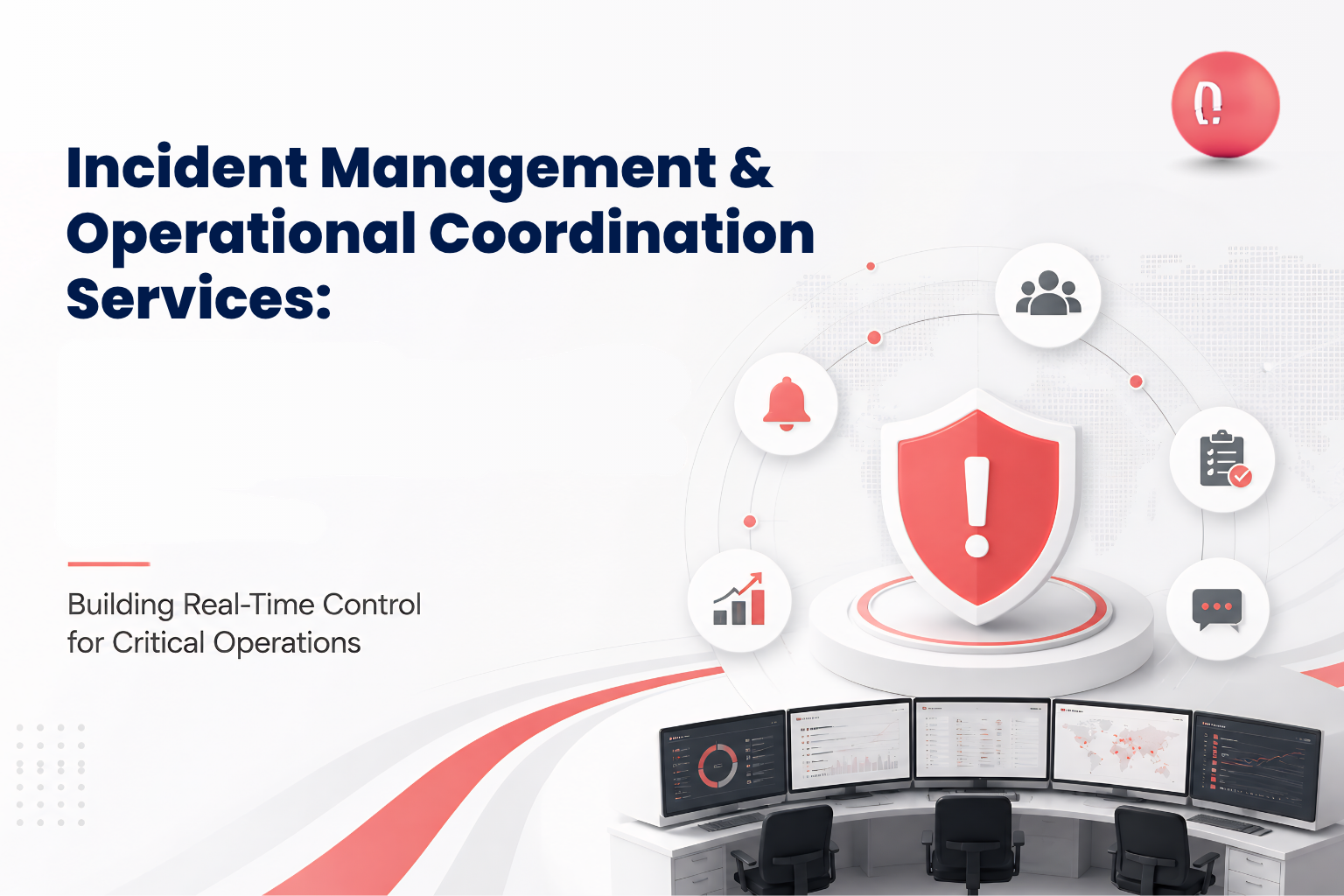
In high-pressure environments, whether it’s managing large-scale operations, handling emergencies, or coordinating multiple teams, clarity and speed are everything. Most organizations struggle not because of lack of resources, but because of lack of coordination, visibility, and structured systems. This is where modern incident management and operational coordination services come into play. Instead of relying on scattered communication, spreadsheets, or delayed reporting, businesses and agencies can operate through a centralized, real-time system that connects everything—people, data, and decisions. The Real Challenge: Disconnected Operations Organizations dealing with complex operations often face the same problems: These issues create confusion, slow response times, and increase the risk of poor decision-making. Operational coordination services solve this by creating a single system where everything is visible, trackable, and actionable in real time. Centralized Command & Control Systems One of the core services provided is building centralized command systems where all operations are managed from a single interface. This allows organizations to: Instead of relying on multiple channels, everything is connected in one place, improving clarity and control. Systems like these are designed to ensure that everyone sees the same information at the same time, which is critical for fast and accurate decision-making. Real-Time Resource & Asset Management Managing resources during operations is one of the most challenging tasks. Without proper systems, tracking personnel, equipment, and supplies becomes chaotic. This service focuses on: Organizations gain full visibility into their resources, allowing them to respond quickly and avoid delays. Advanced systems enable tracking across multiple locations while maintaining a clear operational overview. Situation Reporting & Workflow-Based Execution Another critical service is structured reporting and workflow management. Instead of manual reporting, organizations can generate real-time updates and reports automatically. This includes: These systems ensure that reporting is not only faster but also consistent and reliable. Operational workflows are designed to guide teams step-by-step, ensuring that every task is completed correctly and on time. GIS Mapping & Operational Visibility One of the most powerful capabilities in operational systems is visual awareness. Through mapping and visualization services, organizations can: This provides a “big picture” view of operations, helping decision-makers understand situations instantly and act accordingly. Real-time dashboards and mapping tools transform raw data into actionable insights, improving coordination across teams. Mobile & Field Operations Enablement Operations don’t happen only in offices—they happen in the field. That’s why mobile enablement is a key part of these services. Teams in the field can: Data collected in the field syncs automatically with the central system, ensuring that decision-makers always have the latest information. Mobile-first capabilities also allow organizations to track personnel and activities in real time, improving accountability and efficiency. Custom Workflow Configuration Every organization operates differently. A one-size-fits-all system rarely works. These services include building custom workflows tailored to your operations, allowing you to: This flexibility ensures that the system adapts to your operations—not the other way around. Seamless Communication Across Teams Communication breakdown is one of the biggest reasons operations fail. Operational coordination services create systems where: This eliminates confusion and ensures that everyone is aligned with the current situation. End-to-End Operational Lifecycle Support These services are not limited to a single phase. They cover the entire operational lifecycle: This end-to-end approach ensures continuity and consistency across all stages of operations. Industry Applications Operational coordination systems are used across multiple industries: Any organization that deals with complex, multi-team operations can benefit from these services. Why These Services Matter When operations are connected, businesses and agencies experience: Instead of reacting to problems, organizations can operate proactively with full control and visibility. The Future of Operational Systems The future of operations lies in connected, real-time systems where information flows instantly and decisions are data-driven. Organizations that adopt structured operational coordination systems will have a clear advantage in managing complexity, scaling operations, and delivering better outcomes. Take Control of Your Operations Managing complex operations without the right system leads to delays, confusion, and missed opportunities. The solution is not more tools—it is a connected operational platform that brings everything together. If you want to improve visibility, streamline coordination, and gain real-time control over your operations, explore how DLAN.ai can help you build a smarter, more efficient system tailored to your needs.
Artificial intelligence has moved beyond experimentation and into execution. Today, businesses are not just using AI tools they are building entire systems powered by AI to run their operations. The real transformation is happening at the workflow level, where disconnected processes are being replaced by intelligent, unified systems. AI workflow automation services are designed to help organizations make this transition. Instead of relying on scattered tools and manual coordination, businesses can implement structured, AI-driven workflows that handle tasks, decisions, and optimizations automatically. What AI Workflow Automation Services Actually Deliver At its core, AI workflow automation is about turning business operations into intelligent, self-managing systems. This is not limited to simple automation. It involves designing workflows that can adapt, scale, and improve over time. These services go beyond implementation. They focus on understanding your business model, identifying inefficiencies, and building systems that align with your goals. The result is a workflow environment where processes are not only automated but also optimized continuously. End-to-End Workflow Design and Consulting Every business has unique processes, and automation should reflect that. One of the key services involves analyzing existing workflows in detail and identifying gaps, delays, and inefficiencies. Instead of layering automation on top of outdated systems, the approach is to redesign workflows from the ground up. This ensures that automation is built on a strong foundation. This includes mapping out how tasks move across teams, where decisions are made, and how systems interact. The outcome is a clear, structured workflow that is ready for automation. Custom AI Agent Development AI agents are at the heart of intelligent workflows. These are not generic tools—they are tailored systems designed to perform specific roles within your business. Depending on your needs, AI agents can be built to: What makes these agents powerful is their ability to operate independently while still being part of a larger system. They can communicate with each other, share data, and execute tasks collaboratively. This creates a workflow environment where multiple agents work together to achieve business objectives. Multi-Agent Workflow Orchestration Automation is not just about individual tasks—it is about how those tasks connect and flow together. Workflow orchestration ensures that every step in a process is coordinated seamlessly. This service focuses on building systems where: Instead of manually overseeing processes, businesses can rely on orchestrated workflows that run smoothly in the background. This is particularly valuable for complex operations where multiple steps and stakeholders are involved. System Integration and AI Ecosystem Development Most organizations already use a variety of tools—CRMs, marketing platforms, analytics tools, and more. One of the biggest challenges is connecting these systems in a meaningful way. AI workflow automation services address this by creating a unified ecosystem. Tools are integrated so that data flows seamlessly between them, eliminating silos and reducing manual effort. The focus is not just on connection, but on creating intelligent interactions between systems. This ensures that workflows are not only connected but also optimized for performance. Process Automation and Continuous Optimization Once workflows are designed and systems are integrated, the next step is automation. This involves replacing repetitive and time-consuming tasks with intelligent processes. However, automation is not a one-time effort. Continuous optimization is a critical part of the service. AI systems analyze performance data and identify areas for improvement. Over time, workflows become faster, more accurate, and more efficient. This ongoing improvement ensures that businesses stay competitive in a rapidly changing environment. Industry-Specific Workflow Solutions AI workflow automation services are highly adaptable and can be customized for different industries and use cases. In marketing, workflows can automate campaign execution, content generation, and performance tracking. In recruitment, they can streamline candidate evaluation and hiring processes. Customer support systems can benefit from automated query handling and intelligent routing. For data-driven organizations, workflows can automate data collection, analysis, and reporting, providing real-time insights without manual intervention. Each solution is tailored to the specific needs of the business, ensuring maximum impact. Scalable Infrastructure for Growing Businesses One of the biggest advantages of AI workflow automation is scalability. As businesses grow, their operations become more complex. Manual systems struggle to keep up with this growth. AI-driven workflows are designed to scale effortlessly. They can handle increased workloads without requiring additional resources. This allows businesses to expand their operations while maintaining efficiency and consistency. Security, Control, and Performance Monitoring Automation must be reliable and secure. AI workflow services include robust monitoring systems that track performance, identify issues, and ensure smooth operation. Businesses maintain full control over their workflows while benefiting from automation. Security measures are implemented to protect data and ensure compliance with industry standards. This balance between automation and control is essential for long-term success. Why Businesses Choose AI Workflow Services Organizations are increasingly adopting AI workflow automation because it delivers measurable results. Operations become faster and more efficient. Teams can focus on strategic initiatives instead of repetitive tasks. Decision-making improves with access to real-time insights. Perhaps most importantly, businesses gain the ability to innovate. With intelligent systems handling routine work, there is more room for creativity and growth. The Future of Business Operations We are entering an era where workflows are no longer static. They are dynamic systems that can adapt to changing conditions, learn from data, and improve continuously. AI workflow automation services are enabling this shift. They provide the tools and expertise needed to build operations that are not just efficient, but also intelligent. Businesses that embrace this approach will be better positioned to compete in the future. Build Intelligent Workflows That Scale With You AI workflow automation is not just about improving processes—it is about transforming how your business operates. By integrating intelligent systems, automating complex tasks, and continuously optimizing workflows, you can create an environment where efficiency and innovation go hand in hand. If you’re looking to move beyond manual processes and fragmented tools, it’s time to adopt a smarter approach. Explore how DLAN.ai can help you design, build, and scale intelligent workflows tailored to your business.
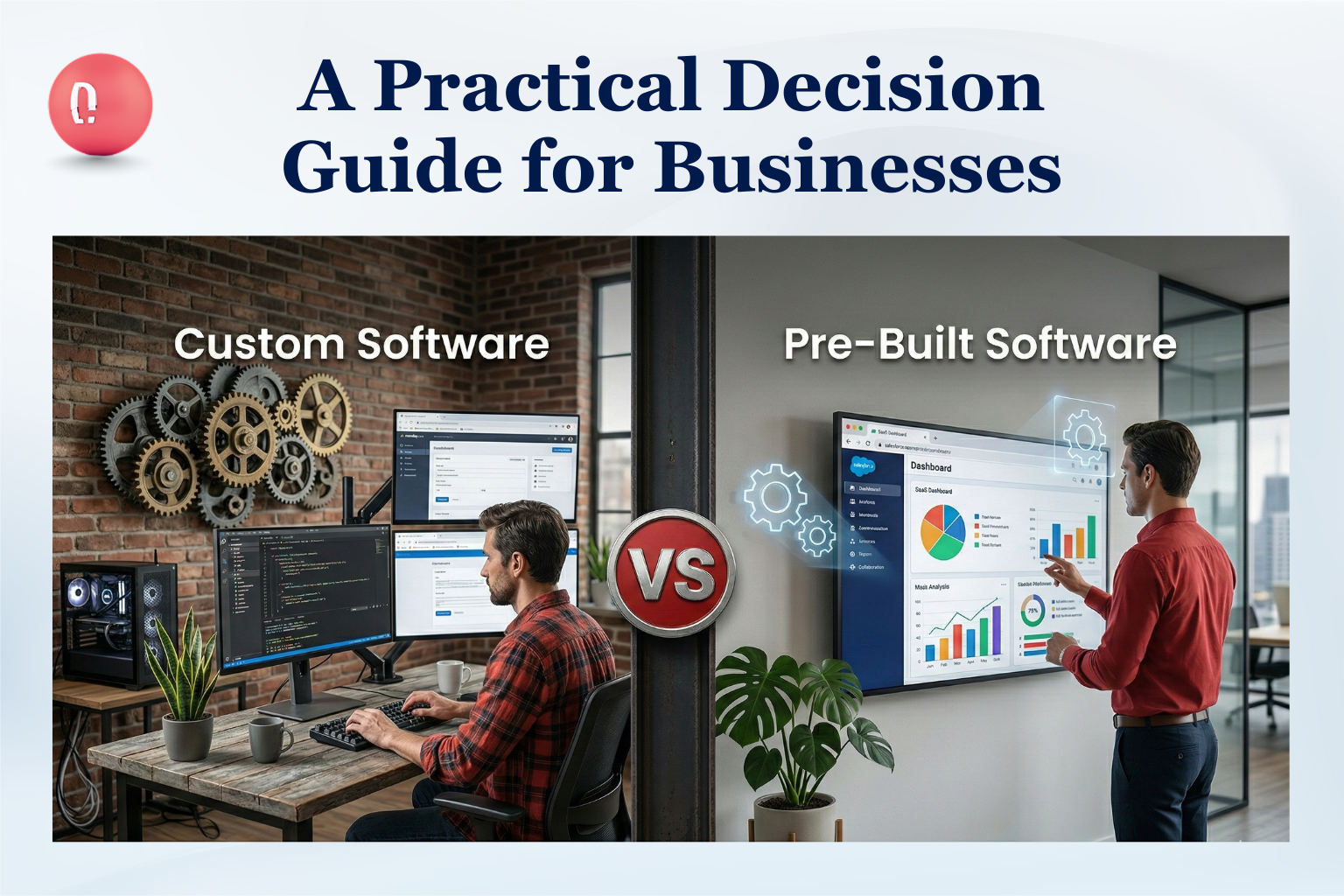
Choosing the right software is one of the most critical decisions a business can make. The choice between custom software and pre-built (off-the-shelf) software affects efficiency, costs, scalability, and long-term growth. While pre-built solutions offer speed and convenience, custom software provides tailored functionality that aligns perfectly with business needs. Understanding the advantages, limitations, and costs of each option helps businesses make an informed decision that maximizes value and supports strategic objectives. This guide breaks down the key differences and helps determine which solution is right for your organization. What Is Pre-Built Software? Pre-built software is a ready-made application designed for general use across a wide range of businesses. It is usually installed or accessed via subscription, with pre-defined features and workflows. These solutions are quick to deploy and often come with support and regular updates. However, they are built for general requirements, which means they may not fully meet your organization’s unique needs. Businesses may need to adapt processes to the software or rely on multiple tools to fill functional gaps. What Is Custom Software? Custom software is developed specifically for your business to meet its unique requirements. It is built to support your workflows, processes, and long-term objectives. Unlike pre-built software, custom solutions offer flexibility, scalability, and precise alignment with your operations. From automating internal processes to improving customer experiences, custom software is tailored to solve your specific challenges and grow with your business. Key Differences Between Custom and Pre-Built Software Understanding the differences between custom and pre-built software is crucial for making an informed decision. Each approach has unique advantages, costs, and limitations, and choosing the right one depends on your business needs, workflows, and long-term goals. 1. Functionality and Fit Pre-built software offers standard features designed to meet the needs of a wide range of businesses. While it can cover common tasks, it may not fully support your unique processes, forcing teams to adapt their workflows to the software. Custom software, on the other hand, is built specifically around your business operations. Every feature is designed to align with your workflows, ensuring the software truly supports your goals and maximizes efficiency. 2. Implementation Time Pre-built software is ready to use immediately, allowing businesses to deploy it within days or weeks. This makes it a convenient option when time is critical. Custom software requires a development cycle that includes requirement gathering, design, testing, and deployment. While this takes more time upfront, the result is a solution that fits your exact needs and avoids compromises on functionality. 3. Cost Structure Pre-built software generally comes with lower initial costs and often uses subscription-based pricing models. This makes it accessible for businesses with limited budgets. Custom software typically requires a higher upfront investment. However, it avoids unnecessary licensing fees for features you don’t use and provides better long-term value because it grows and adapts with your business. 4. Scalability Pre-built software may have limitations when it comes to customization or scaling as your business grows. Adding new features or accommodating more users can be difficult or expensive. Custom software is designed to scale with your organization. As your workflows evolve or your team grows, the software can be updated or expanded without major disruption, ensuring it remains useful for years to come. 5. Support and Maintenance With pre-built software, support is generally standardized, and updates are provided according to the vendor’s schedule. Customization options for these updates are limited. Custom software comes with tailored support and maintenance plans. Developers can address issues, add new features, and modify the software as your business needs change, ensuring your system stays efficient and relevant. Benefits of Pre-Built Software Pre-built software, also known as off-the-shelf software, offers several advantages for businesses that need ready-to-use solutions. While it may not be tailored to every workflow, it provides convenience, cost-effectiveness, and reliability that can be valuable for many organizations. Quick Deployment One of the main benefits of pre-built software is its speed of implementation. Since the application is already developed, businesses can get started immediately without long development cycles. This is particularly useful for teams that need a fast solution to manage operations, track data, or support day-to-day processes. Lower Upfront Costs Pre-built solutions generally come with lower initial expenses compared to custom software. Many offer subscription-based pricing or one-time purchase options, making them ideal for small businesses or startups with limited budgets. This allows organizations to access functional software without committing to a large upfront investment. Reliable Updates Most pre-built software providers regularly release updates, bug fixes, and enhancements. This ensures that the software remains compatible with evolving technology standards and reduces the burden of maintenance on your internal teams. Businesses can rely on vendor support for troubleshooting and technical issues. Proven Functionality Pre-built software has been tested by many users across industries, which reduces the risk of errors, bugs, or performance issues. Its functionality is established and reliable, giving businesses confidence that the core features will work effectively without extensive testing or customization. Benefits of Custom Software Custom software offers unique advantages for businesses that need solutions designed specifically for their workflows, processes, and long-term goals. Unlike pre-built software, it provides flexibility, scalability, and tailored functionality that helps organizations operate more efficiently and gain a competitive edge. Custom Functionality Custom software is built to meet your business’s specific requirements. Every feature is designed around your processes, eliminating unnecessary tools and ensuring that the software truly supports your operations. This precision allows teams to work more efficiently and reduces time wasted on tasks that generic software cannot handle. Better Integration Custom solutions connect seamlessly with your existing systems, tools, and databases. This ensures smooth data flow across platforms, reduces duplicate work, and allows teams to access all necessary information in one place. Better integration leads to fewer errors, faster processes, and improved decision-making. Scalable for Growth As your business grows, custom software can adapt to new workflows, additional users, or increased workloads. Unlike off-the-shelf solutions, which may have limitations, custom software evolves with your organization,
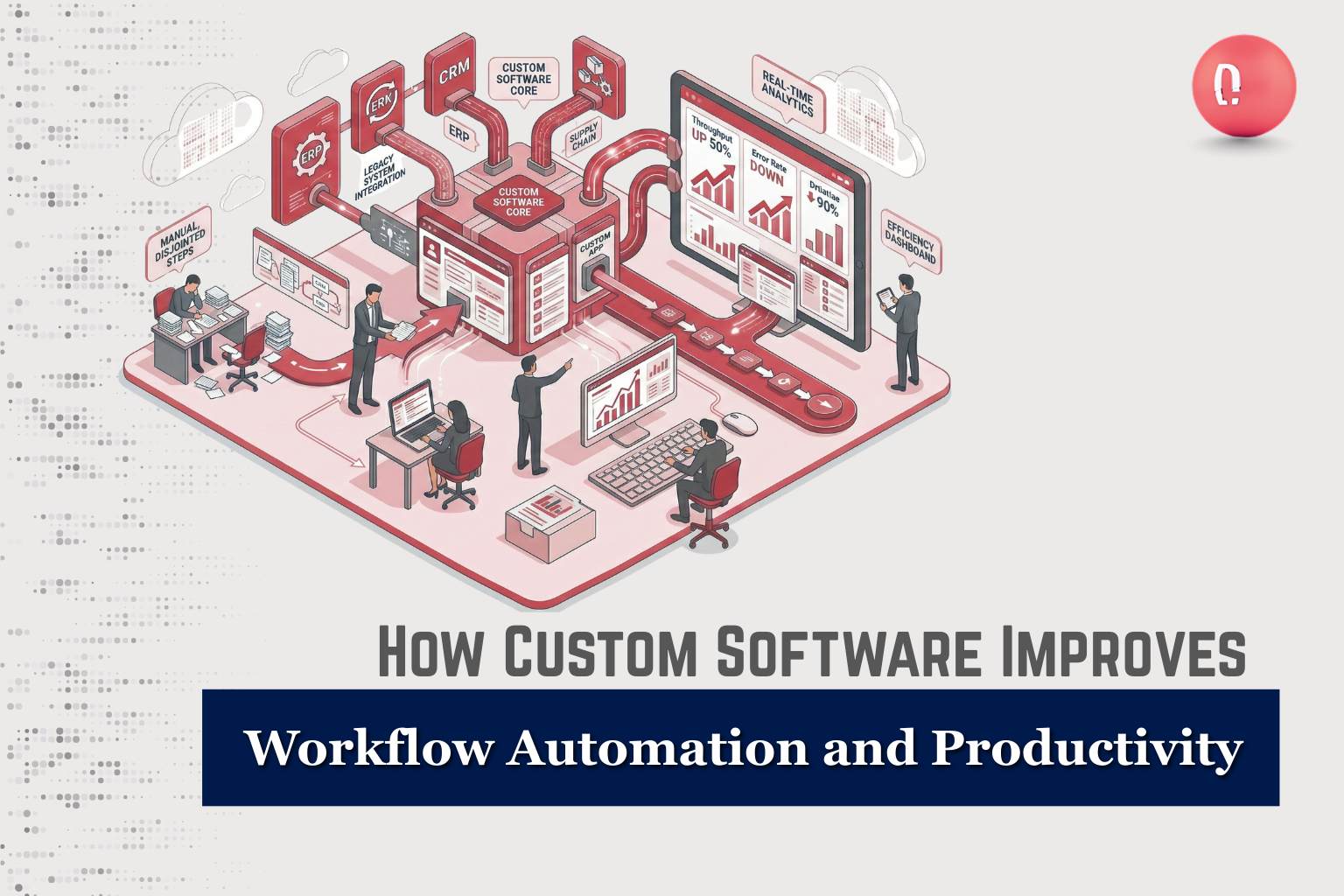
Modern businesses rely on efficient workflows to stay competitive and meet growing demands. Manual processes, disconnected tools, and repetitive tasks often slow teams down and increase the risk of errors. This is where custom software plays a critical role by automating workflows and improving productivity across the organization. Custom software is designed around how your business actually operates. Instead of forcing teams to adapt to generic systems, it simplifies daily tasks, connects processes, and allows employees to focus on meaningful work that drives results. What Is Workflow Automation? Workflow automation uses software to handle repetitive and rule based tasks with minimal human intervention. It ensures that processes move smoothly from one step to the next without delays or manual effort. With custom software, workflow automation is built specifically for your business processes. This ensures automation supports your goals rather than limiting how your teams work. Why Generic Tools Often Fall Short Generic or off-the-shelf software is designed to serve a wide range of businesses, which limits how well it fits specific workflows. While these tools usually offer basic automation features, they are built for general use rather than tailored business processes. As a result, they often include unnecessary features that add complexity while failing to support critical functions your teams rely on every day. Because generic tools are not aligned with how your business actually operates, employees are often forced to adjust their workflows or rely on manual workarounds. This reduces the effectiveness of automation and slows productivity instead of improving it. Poor alignment also makes adoption harder, as users may find the software confusing or inefficient for their tasks. Custom software solves these challenges by focusing only on what matters most to your business. It is designed around your workflows, automates the right processes, and removes unnecessary complexity. This alignment makes automation more effective, improves user adoption, and delivers long term productivity gains that generic tools cannot provide. How Custom Software Improves Workflow Automation Custom software transforms the way businesses manage daily operations by automating tasks and connecting processes. Instead of relying on manual effort, it creates structured workflows that improve speed, accuracy, and overall efficiency. Automates Repetitive Tasks Custom software can automate routine activities such as data entry, approvals, notifications, and reporting. By removing repetitive manual work, employees save time and can focus on more meaningful tasks. Automation also reduces the risk of human error and ensures that tasks are completed consistently and on schedule. Creates Seamless Process Flow Custom solutions connect different systems, teams, and departments into a single, unified workflow. When one task is completed, the next step is automatically triggered without manual intervention. This eliminates delays, improves coordination between teams, and ensures work moves smoothly from start to finish. Reduces Bottlenecks and Delays Workflow automation removes the need for constant follow ups and manual handoffs. Tasks progress automatically, approvals are completed faster, and projects remain on track. This helps businesses avoid unnecessary delays and maintain momentum without continuous supervision. Improves Accuracy and Consistency Automated workflows follow predefined rules every time, ensuring tasks are completed the same way on each execution. This consistency reduces mistakes, improves reliability, and maintains high quality standards across business operations. How Custom Software Boosts Productivity Custom software improves productivity by simplifying how teams work and removing unnecessary obstacles. By aligning technology with daily tasks, it helps employees work faster, collaborate better, and deliver consistent results as the business grows. Saves Time for Employees By handling repetitive and time consuming work, custom software allows employees to focus on strategic, creative, and high value tasks. This not only improves efficiency but also increases job satisfaction, as teams spend less time on manual work and more time contributing meaningfully to business goals. Enhances Collaboration Custom software can centralize communication, task management, and documentation in one platform. Teams gain better visibility into workflows, responsibilities, and progress, which reduces confusion and improves coordination across departments. Clear collaboration leads to faster execution and better outcomes. Provides Real Time Insights With custom dashboards and reporting tools, managers gain real time visibility into workflow performance and productivity. These insights help identify inefficiencies early, track progress accurately, and make informed decisions that improve overall operational efficiency. Scales with Business Growth As businesses grow, their workflows and workloads become more complex. Custom software can adapt to new requirements, support additional users, and handle increased demand without disrupting operations. This ensures productivity continues to improve without the need for major system changes or replacements. Common Workflow Automation Use Cases Workflow automation can be applied across multiple business functions to improve efficiency, accuracy, and employee experience. Custom software ensures automation is aligned with real operational needs rather than generic processes. Employee Onboarding and HR Processes Custom software can automate employee onboarding, leave approvals, and performance tracking. This reduces administrative workload for HR teams and ensures a smoother, more consistent experience for employees from their first day onward. Sales and Customer Management Custom workflows help automate lead tracking, follow ups, and customer communication. By reducing manual data entry and delays, sales teams can focus on building relationships, closing deals faster, and improving customer satisfaction. Finance and Operations Automation simplifies invoice processing, approvals, and financial reporting. This reduces delays, minimizes errors, and ensures greater accuracy in financial operations, helping businesses maintain better control over cash flow and compliance. Project and Task Management Custom tools ensure tasks are assigned clearly, progress is tracked in real time, and deadlines are met. Automation reduces the need for manual follow ups and keeps projects on schedule with minimal effort. Why Businesses Choose DLAN for Custom Workflow Automation DLAN designs custom software solutions that streamline workflows and improve productivity. Their team analyzes existing processes and builds automation that aligns with real business needs. With scalable, secure, and practical solutions, DLAN helps businesses reduce inefficiencies and maximize performance. Ready to automate your workflows and boost productivity?Contact DLAN today to explore custom software solutions designed for your business growth.